
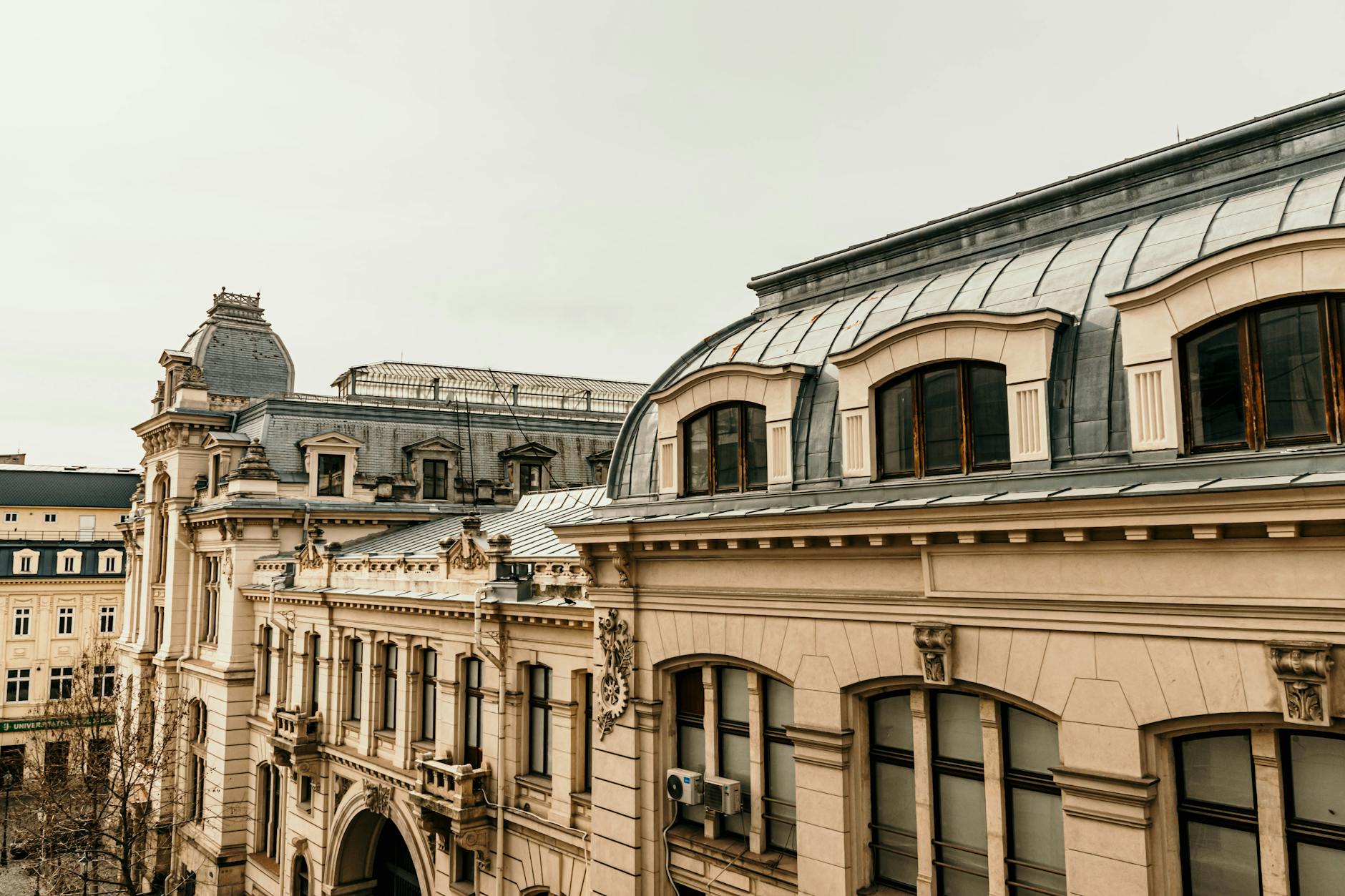
Brunswick’s history is the story of Melbourne’s inner north compressed into a few streets — from colonial-era quarries and brickworks to post-war migration, industrial decline, creative renewal, and the gentrification that followed. Understanding that history explains why Sydney Road feels the way it does today: a strip that carries the weight of every era it has survived.
The Colonial Foundations (1839-1880s)
Brunswick was first surveyed in 1839 and named after the Duchy of Brunswick in Germany. The area that would become the suburb was originally part of the traditional lands of the Wurundjeri people of the Kulin nation, who had lived along the Merri Creek corridor for thousands of years before European settlement.
The early European settlement was driven by quarrying. Brunswick’s bluestone deposits were some of the most accessible near Melbourne, and the quarries along Sydney Road and Albert Street supplied the stone that built much of Melbourne’s colonial-era infrastructure — the gutters, the public buildings, the bluestone laneways that still exist today. The brickworks followed, using the local clay to produce the materials for the suburb’s own housing stock.
Sydney Road was established as the main thoroughfare early, running north from the city toward the goldfields. By the 1860s, it was already functioning as a commercial strip — a role it has never stopped playing.
The housing from this era — the single-fronted workers’ cottages and the two-storey Victorian terraces — still forms the architectural backbone of Brunswick. Walk the streets between Sydney Road and Lygon Street and you are walking through the suburb’s original residential grid.
The Industrial Era (1890s-1950s)
By the early 20th century, Brunswick was a firmly working-class suburb. Textile mills, boot factories, and small manufacturing operations lined the streets behind Sydney Road. The suburb’s economy was built on making things, and the people who lived here were the people who worked in those factories.
The social infrastructure of this era — the pubs, the workers’ clubs, the church halls, the sporting grounds — became the community’s connective tissue. The Retreat Hotel, which still stands on Sydney Road, dates from this period and served as a social hub for the working population long before it became known for live music.
Brunswick was incorporated as a borough in 1857 and became a city in 1908 — the City of Brunswick, which governed until the council amalgamations of 1994 created the City of Moreland (now Merri-bek).
By the interwar period, Brunswick was densely populated and thoroughly industrial. The suburb’s identity was defined by its workers, its factories, and its proximity to Melbourne’s economic centre.
The Migration Waves (1950s-1980s)
Post-war migration transformed Brunswick fundamentally. The waves came in sequence and each left a permanent mark on the suburb.
Italian migration arrived first, with families from southern Italy and Sicily settling along Lygon Street and the streets between Sydney Road and the eastern boundary. They brought the espresso machines, the delis, the pasta shops, and the food culture that still defines parts of Brunswick and Brunswick East today. Lygon Street’s Italian character, which runs from Carlton through to Brunswick East, has its roots in this wave.
Greek migration followed closely. Greek families settled throughout Brunswick, establishing bakeries, fish and chip shops, churches, and community organisations. The Greek Orthodox church on Albert Street and the Greek restaurants along Sydney Road are direct legacies of this settlement.
Turkish and Lebanese migration intensified from the 1970s onward. The Middle Eastern food corridor on Sydney Road — A1 Bakery, the Turkish restaurants, the Lebanese grocers — emerged from this wave. A1 Bakery, which has been on Sydney Road since the 1970s, is one of the most visible legacies of this era. The bakeries, the barbers, and the textile shops that still line the northern stretch of Sydney Road reflect the Turkish and Lebanese communities that made Brunswick home.
These migration waves did not just change what people ate. They changed the street language, the shop signage, the religious institutions, and the social networks. Brunswick became genuinely multicultural — not in the marketing-brochure sense, but in the lived-reality sense of multiple communities sharing the same streets and institutions.
The Industrial Decline (1980s-2000s)
As manufacturing left Melbourne’s inner suburbs, Brunswick’s factories closed or were repurposed. The textile mills shut down. The boot factories went quiet. The workers who had defined the suburb’s character either aged out or moved on, and the housing stock they left behind became available at prices that attracted new populations.
This was the window that changed everything. The cheap rent in former industrial spaces and workers’ cottages drew students from the nearby University of Melbourne, artists looking for studio space, musicians who needed rehearsal rooms, and the broader creative class that would eventually reshape the suburb’s identity.
The transition was gradual — a converted warehouse here, a new cafe there, a gallery in a former workshop. Sydney Road’s commercial mix shifted as new businesses opened alongside the established migrant-community shops. The old-timers and the newcomers coexisted, sometimes awkwardly, but the suburb absorbed the change without losing its essential character.
The Creative Peak (2005-2015)
Brunswick peaked around 2015 — and saying that is not a criticism. It was a genuine golden era.
The live music scene was thriving. The Spotted Mallard on Sydney Road was drawing national touring acts. The Brunswick Ballroom, in a restored 1920s building, became one of Melbourne’s most atmospheric gig venues. Smaller venues — back rooms, warehouse spaces, pub stages — gave emerging artists platforms that no longer exist in the same density.
The food scene diversified beyond the heritage communities. Thai, Vietnamese, Malaysian, and Japanese restaurants joined the Italian, Greek, Turkish, and Lebanese establishments. The cafe culture exploded, with roasters like Code Black and Disciple setting up on Sydney Road.
Vintage shopping, record stores, independent bookshops, and op shops created a retail culture that was genuinely different from mainstream suburban shopping. Sydney Road during this period was one of Melbourne’s most distinctive and self-sustaining commercial strips.
Rent was still affordable enough that artists, musicians, and students could live here. Share houses on the back streets between Glenlyon Road and Victoria Street were the incubators for bands, art collectives, and community projects that defined inner-north Melbourne’s cultural identity.
Brunswick was deservedly proud of this era, and the suburb’s identity today is still shaped by it — even as the conditions that created it have changed.
Gentrification and the Modern Suburb (2016-Present)
The forces that made Brunswick attractive — the character, the food, the culture, the proximity to the CBD — also made it expensive. Rents rose. Property prices climbed past the million-dollar mark. Some of the artists and musicians who had defined the suburb’s creative era were priced out.
The level crossing removal project on the Upfield line reshaped parts of the suburb’s physical infrastructure. The train stations at Jewell, Brunswick, and Anstey were rebuilt. New parkland — Bulleke-bek Park and Garrong Park — was created beneath the raised tracks. The construction was disruptive, but the results have improved transport reliability and created genuinely useful public space.
New apartment developments along Sydney Road and around the train stations are adding density. Build quality varies — some of the newer developments are well-designed, many are not. The suburb’s population is growing, and the mix is shifting toward young professionals and dual-income families who can afford the current pricing.
Despite the changes, Brunswick’s fundamentals remain strong. The Greek, Turkish, Lebanese, and Italian heritage communities are still visibly present. The live music scene, while smaller than its peak, continues at the Brunswick Ballroom, the Retreat, and the Bergy Seltzer. The food culture is deeper and more diverse than ever. The counter-culture vibe is quieter but not gone.
The council area was renamed from the City of Moreland to the City of Merri-bek in 2022, acknowledging the Wurundjeri name for the Merri Creek. The postcode remains 3056.
FAQ
When was Brunswick established? Brunswick was first surveyed in 1839 and named after the Duchy of Brunswick. It became a borough in 1857 and a city in 1908.
Why is Sydney Road so multicultural? Successive waves of post-war migration — Italian (1950s-60s), Greek (1960s-70s), Turkish and Lebanese (1970s-80s) — each left permanent communities along Sydney Road. Their food, shops, and cultural institutions still define the strip.
What council is Brunswick in? City of Merri-bek (renamed from City of Moreland in 2022). Postcode 3056.
What happened to Brunswick’s factories? Manufacturing left Melbourne’s inner suburbs from the 1980s onward. The former factory and warehouse spaces were gradually converted to studios, cafes, galleries, and residential developments — driving Brunswick’s creative-era transformation.
Verdict
Brunswick’s history matters because it explains the suburb’s present. The bluestone quarries built the physical infrastructure. The factories built the working-class community. The migration waves built the food culture. The creative class built the cultural identity. And gentrification is testing whether any of it survives the next chapter.
The suburb peaked around 2015 and is still proud of it — deservedly so. What comes next depends on whether the density and development reshaping Sydney Road can coexist with the communities, the venues, and the independent businesses that made Brunswick worth living in.
Also see: The Honest Guide to Brunswick | Hidden Gems in Brunswick | Family Guide to Brunswick | Brunswick Suburb Guide
Explore More of Brunswick
- Brunswick Things To Do This Weekend
- Brunswick Cheap Eats
- Brunswick Rent Guide
- Brunswick Suburb Roast
- Brunswick Date Night Guide
- Brunswick New Openings
- Brunswick Living Guide
- Brunswick Things To Do
💬 Discussion
Join the conversation — no account needed