Verdict Box
Honest reality: Burnley is not a coworking suburb. It is a small, useful edge-of-Richmond pocket where remote workers trade choice for convenience. You get Burnley Station, quick access to Swan Street and Bridge Road, Yarra-side walking breaks, and one standout local cafe anchor, but you do not get a deep roster of laptop-friendly venues or serviced office options inside the suburb boundary. Rent pressure is real: the suburb prices like Richmond’s quieter cousin, not like a bargain inner-east workaround. Commute reality is excellent if your office is CBD, Richmond, Cremorne, Hawthorn or South Yarra; less excellent if you drive at peak hour near the Burnley Tunnel and CityLink approaches. Food scene: thin locally, better once you cross into Richmond. Family fit: fine for established households who value parks and trains, weaker for people needing everyday retail at the doorstep. Overall score: 7/10 for hybrid workers, 5/10 for people expecting a self-contained work-from-cafe lifestyle.
At-a-Glance Table
| Factor | Burnley 2026 |
|---|---|
| LGA | Yarra City Council |
| Postcode | 3121 |
| Geographic tier | Inner |
| Region | inner-north |
| Transport grade | A+ |
| Overall grade | A+ |
Who It Suits
Nina, 34, hybrid policy lead — wants two CBD office days without living inside Richmond’s noise. The Quiet Operator — works from home most days and uses cafes as a reset, not a second office. Sam and Jo, 41, school-run planners — like inner-city access but still read traffic patterns before signing a lease.
Rent & Property Reality
The 2026 working number for Burnley is a median 1-bedroom unit rent of $475 per week; the broader Burnley unit market is $500 per week and up 2% year on year, according to realestate.com.au, while Domain also shows Burnley’s 1-bedroom unit median at $475. Plain English: Burnley is not cheap just because it is small, semi-industrial in parts, and easy to miss on a map. The pricing sits in that awkward inner-east band where renters pay for access rather than glamour. You are paying for Burnley Station, the ability to be in Richmond or the CBD quickly, the Yarra corridor, and the fact that supply is limited. There simply are not many Burnley-only apartments turning over at any one time, so one or two listings can shape the apparent market.
For remote workers, the rent number matters because the home has to carry more of the week. A $475 one-bedder that has poor natural light, no proper desk wall, weak cooling, or a noisy bedroom is not a bargain if you are taking calls from it four days a week. Burnley’s better value is usually not the cheapest listing; it is the older, well-laid-out apartment with a usable living room, a bedroom away from the main road, and a train walk that does not require crossing the ugliest traffic points twice a day.
Budget beyond rent too. If you do not have a car space, check parking rules before applying. If you do have one, ask whether it is easy to enter and exit during peak periods. A remote worker can tolerate a smaller place if the street is quiet, the cafe walk is pleasant, and the station is close. They will resent the same rent quickly if the apartment faces traffic, the balcony is unusable, and every parcel pickup means a trip into Richmond.
Local Reality & Pockets
Favour the residential pockets around Madden Grove, Adam Street, Barkly Avenue and the quieter streets feeding toward Burnley Station if your priority is remote-work calm. This is the part of Burnley where the suburb makes the most sense: short train access, Yarra paths nearby, and enough separation from the heavier road infrastructure to make working from home feel plausible. Madden Grove also gives you the Serotonin Eatery reference point, which matters because Burnley’s local cafe map is not deep. If your daily rhythm is coffee, train, home office, walk, repeat, this pocket is the first one to inspect.
Be more cautious near the bigger road edges, tunnel approaches and freeway-adjacent sections. Burnley’s map looks compact, but the lived experience changes sharply from street to street. Noise can mean traffic hum, truck movement, train noise, or weekend spillover from Richmond rather than one obvious problem. Inspect at the actual times you will be home: 8 am for traffic, early afternoon for work calls, and after 6 pm for the return commute. A quiet Saturday inspection can lie.
Parking is the second gotcha. Some streets feel residential until you realise how many people are competing for spaces: residents, visitors, station users, nearby workers and overflow from Richmond. If you own a car, do not treat permit eligibility as a footnote. Confirm it before signing, especially in newer apartment stock where council permits may be restricted.
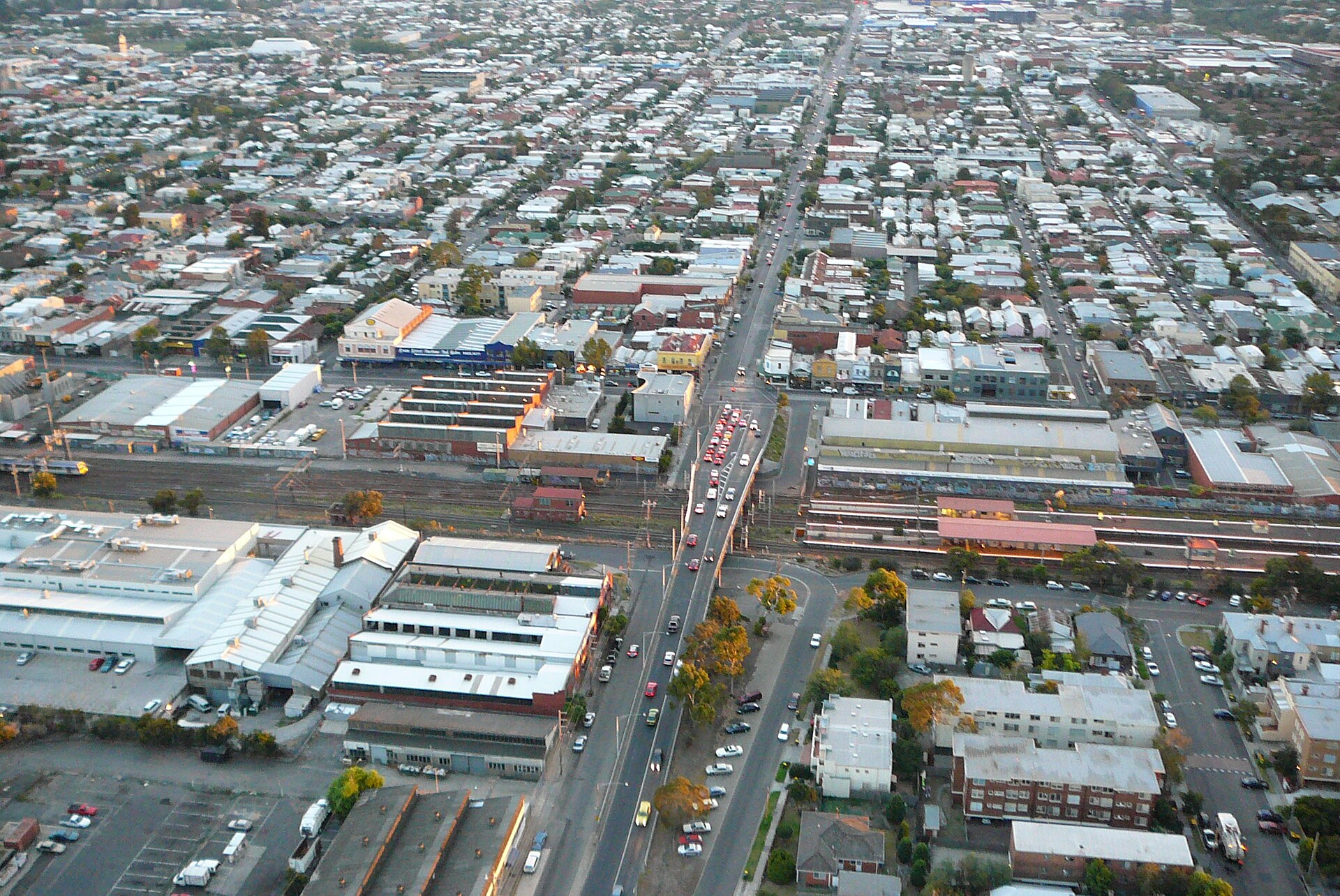
Transport is the payoff. Burnley Station is the suburb’s practical spine, with rail connections that make CBD and inner-east office days easy. Cycling can also work well via the Yarra corridor, though confidence matters around road crossings. The honest trade-off: Burnley is excellent as a launchpad and ordinary as a self-contained village. The second gotcha is amenity depth. For groceries, gyms, late food, printing, medical errands and most coworking options, you will usually drift into Richmond, Hawthorn, South Yarra or Cremorne.
Signature Craving
Serotonin Eatery on Madden Grove is the local remote-worker test: if you can build a satisfying weekday rhythm around a walk there, a station run, and a quiet home setup, Burnley will probably work for you. If you need a different cafe every morning, it will feel thin fast. The venue gives Burnley a proper wellness-brunch anchor rather than a strip of interchangeable laptop stops, and that is the point. Use it for breakfast meetings, a reset after a long call block, or a Saturday check on whether the suburb’s quieter pace suits you. For long laptop sessions, be considerate and read the room; Burnley does not have endless spare cafe capacity. The smarter pattern is coffee locally, focused work at home, and coworking or bigger meeting days in Richmond, Cremorne or South Yarra.
Comparisons Table
| Suburb | Transport | Tier | Region |
|---|---|---|---|
| Burnley | A+ | Inner | inner-north |
| Abbotsford | B+ | Inner | inner-north |
| Clifton Hill | A | Inner | inner-north |
| Collingwood | B | Inner | inner-north |
Trust Block
Author: Priya Sharma — Family-and-community correspondent; reads council planning notices for fun.
Data: data/melbourne_suburbs_master.json (Codex per-LGA enumeration, cross-checked vs VEC + Australia Post + ABS SA2 boundaries), data/suburb_scores.json (composite percentile grades), data/venues/.json (OpenStreetMap + Gemini-verified venue catalog).
Last reviewed: 2026-05-26. Not financial advice. We do not accept paid placements in editorial.
FAQ
Q: Is Burnley actually good for remote workers in 2026? A: Yes, but only for a specific kind of remote worker. Burnley suits people who mostly work from home and want strong transport, quiet streets and quick access to bigger neighbouring suburbs. It is weaker for people who want multiple coworking spaces, a deep cafe rotation or lots of after-work convenience within a five-minute walk. The practical setup is home office first, Burnley Station second, Serotonin Eatery as the local cafe anchor, and Richmond or Cremorne for bigger workdays, meetings and services.
Q: Are there coworking spaces inside Burnley? A: Burnley is not where you should look if the requirement is a formal coworking desk inside the suburb boundary. The realistic move is to use nearby Richmond, Cremorne, South Yarra or the CBD for paid coworking and keep Burnley as the residential base. That can still work well for hybrid workers because the train access is strong and the suburb is compact. The mistake is renting in Burnley expecting a local coworking ecosystem to appear around you; it is more of a quiet launchpad than a work hub.
Q: Which Burnley streets are best for working from home? A: Start with the calmer residential pockets around Madden Grove, Adam Street and Barkly Avenue, then judge each building on orientation, glazing, room shape and traffic exposure. For remote work, the best street is not just the prettiest one; it is the one where your bedroom is quiet, your desk can sit near natural light, and deliveries are not a daily problem. Inspect during weekday traffic and again after work if possible, because Burnley’s noise profile changes around peak movement and nearby Richmond activity.
Q: What is the biggest downside of living in Burnley as a hybrid worker? A: The main downside is that Burnley is smaller than its price tag suggests. You may pay inner-east rent but still leave the suburb for many normal errands: larger grocery shops, gyms, late dinners, coworking, specialist coffee choices and some health services. That is fine if you already live across Richmond, Hawthorn and South Yarra mentally. It is frustrating if you want your suburb to provide the whole week. Burnley rewards people who value access more than a dense local main street.
Q: Is Burnley noisy? A: Parts of it can be. Burnley has rail, major road infrastructure, CityLink and Richmond overflow close enough that a map inspection is not enough. Some streets feel surprisingly calm, while others pick up traffic hum or awkward peak-hour movement. Apartment orientation matters a lot: a rear-facing older unit can be far easier to work in than a newer apartment with a road-facing balcony. Test noise with windows open and closed, and stand silently in the bedroom for a few minutes during inspection rather than relying on the agent’s pace.
Q: Do I need a car in Burnley? A: Many remote or hybrid workers can live in Burnley without using a car daily, especially if their office days are in the CBD, Richmond, Cremorne, Hawthorn or South Yarra. Burnley Station does a lot of heavy lifting, and cycling or walking can cover some local trips. A car becomes more useful for family logistics, outer-suburb visits and bulk shopping. If you do own one, parking should be treated as a lease condition, not a minor convenience, because street competition and permit rules can materially change daily life.
Q: Is Burnley better than Richmond for remote work? A: Burnley is better than Richmond if your priority is a quieter home base with quick access to Richmond’s services when needed. Richmond is better if you want food, gyms, shops, pubs, coworking and public transport options immediately around you. Remote workers often underestimate how much quiet matters once home becomes the office. Burnley can win on that front, but only if the specific street and building are right. A noisy Burnley apartment is worse than a well-positioned Richmond one, so inspect the property rather than buying the suburb label.
Q: What should renters check before applying for a Burnley apartment? A: Check desk placement, mobile reception, NBN or internet options, heating and cooling, window glazing, parcel access, parking rights and the weekday noise pattern. Ask whether the apartment is eligible for council parking permits if there is no dedicated space. Look at where the bedroom sits relative to roads, rail and shared entries. For a remote worker, these details are not luxuries. They decide whether the place functions as a workplace for 30 to 40 hours a week or becomes a small expensive room you keep trying to escape.
Q: Is Burnley suitable for families where one parent works from home? A: It can be, especially for families who value train access, Yarra-side open space and a slightly quieter setting than central Richmond. The caution is that Burnley does not provide the same everyday retail depth as larger suburbs, so family routines may spill into Richmond, Hawthorn or nearby centres. A parent working from home should prioritise a quiet room, storage, pram or bike access and predictable parking over cosmetic finishes. The suburb works best when the household already accepts that convenience will be regional rather than all on one local strip.
“\n{\n "@context": "https://schema.org",\n "@graph": [\n {\n "@type": "Article",\n "@id": "https://melbz.com.au/burnley/coworking-remote-work/#article",\n "headline": "Burnley 2026: Remote-Work Edges \u0026 Honest Local Verdict",\n "description": "Honest 2026 reality of Burnley for remote workers: tiny local amenity, strong train access, cafe limits, rental pressure, and street-by-street trade-offs.",\n "datePublished": "2026-04-01",\n "dateModified": "2026-05-26",\n "author": {\n "@type": "Person",\n "name": "Priya Sharma",\n "url": "https://melbz.com.au/authors/priya-sharma/"\n },\n "publisher": {\n "@type": "Organization",\n "name": "MELBZ",\n "url": "https://melbz.com.au/"\n },\n "mainEntityOfPage": "https://melbz.com.au/burnley/coworking-remote-work/"\n },\n {\n "@type": "BreadcrumbList",\n "itemListElement": [\n {\n "@type": "ListItem",\n "position": 1,\n "name": "Home",\n "item": "https://melbz.com.au/"\n },\n {\n "@type": "ListItem",\n "position": 2,\n "name": "Burnley",\n "item": "https://melbz.com.au/burnley/"\n },\n {\n "@type": "ListItem",\n "position": 3,\n "name": "Coworking Remote Work",\n "item": "https://melbz.com.au/burnley/coworking-remote-work/"\n }\n ]\n },\n {\n "@type": "FAQPage",\n "mainEntity": [\n {\n "@type": "Question",\n "name": "Is Burnley actually good for remote workers in 2026?",\n "acceptedAnswer": {\n "@type": "Answer",\n "text": "Yes, but only for a specific kind of remote worker. Burnley suits people who mostly work from home and want strong transport, quiet streets and quick access to bigger neighbouring suburbs. It is weaker for people who want multiple coworking spaces, a deep cafe rotation or lots of after-work convenience within a five-minute walk. The practical setup is home office first, Burnley Station second, Serotonin Eatery as the local cafe anchor, and Richmond or Cremorne for bigger workdays, meetings and services."\n }\n },\n {\n "@type": "Question",\n "name": "Are there coworking spaces inside Burnley?",\n "acceptedAnswer": {\n "@type": "Answer",\n "text": "Burnley is not where you should look if the requirement is a formal coworking desk inside the suburb boundary. The realistic move is to use nearby Richmond, Cremorne, South Yarra or the CBD for paid coworking and keep Burnley as the residential base. That can still work well for hybrid workers because the train access is strong and the suburb is compact. The mistake is renting in Burnley expecting a local coworking ecosystem to appear around you; it is more of a quiet launchpad than a work hub."\n }\n },\n {\n "@type": "Question",\n "name": "Which Burnley streets are best for working from home?",\n "acceptedAnswer": {\n "@type": "Answer",\n "text": "Start with the calmer residential pockets around Madden Grove, Adam Street and Barkly Avenue, then judge each building on orientation, glazing, room shape and traffic exposure. For remote work, the best street is not just the prettiest one; it is the one where your bedroom is quiet, your desk can sit near natural light, and deliveries are not a daily problem. Inspect during weekday traffic and again after work if possible, because Burnley’s noise profile changes around peak movement and nearby Richmond activity."\n }\n },\n {\n "@type": "Question",\n "name": "What is the biggest downside of living in Burnley as a hybrid worker?",\n "acceptedAnswer": {\n "@type": "Answer",\n "text": "The main downside is that Burnley is smaller than its price tag suggests. You may pay inner-east rent but still leave the suburb for many normal errands: larger grocery shops, gyms, late dinners, coworking, specialist coffee choices and some health services. That is fine if you already live across Richmond, Hawthorn and South Yarra mentally. It is frustrating if you want your suburb to provide the whole week. Burnley rewards people who value access more than a dense local main street."\n }\n },\n {\n "@type": "Question",\n "name": "Is Burnley noisy?",\n "acceptedAnswer": {\n "@type": "Answer",\n "text": "Parts of it can be. Burnley has rail, major road infrastructure, CityLink and Richmond overflow close enough that a map inspection is not enough. Some streets feel surprisingly calm, while others pick up traffic hum or awkward peak-hour movement. Apartment orientation matters a lot: a rear-facing older unit can be far easier to work in than a newer apartment with a road-facing balcony. Test noise with windows open and closed, and stand silently in the bedroom for a few minutes during inspection rather than relying on the agent’s pace."\n }\n },\n {\n "@type": "Question",\n "name": "Do I need a car in Burnley?",\n "acceptedAnswer": {\n "@type": "Answer",\n "text": "Many remote or hybrid workers can live in Burnley without using a car daily, especially if their office days are in the CBD, Richmond, Cremorne, Hawthorn or South Yarra. Burnley Station does a lot of heavy lifting, and cycling or walking can cover some local trips. A car becomes more useful for family logistics, outer-suburb visits and bulk shopping. If you do own one, parking should be treated as a lease condition, not a minor convenience, because street competition and permit rules can materially change daily life."\n }\n },\n {\n "@type": "Question",\n "name": "Is Burnley better than Richmond for remote work?",\n "acceptedAnswer": {\n "@type": "Answer",\n "text": "Burnley is better than Richmond if your priority is a quieter home base with quick access to Richmond’s services when needed. Richmond is better if you want food, gyms, shops, pubs, coworking and public transport options immediately around you. Remote workers often underestimate how much quiet matters once home becomes the office. Burnley can win on that front, but only if the specific street and building are right. A noisy Burnley apartment is worse than a well-positioned Richmond one, so inspect the property rather than buying the suburb label."\n }\n },\n {\n "@type": "Question",\n "name": "What should renters check before applying for a Burnley apartment?",\n "acceptedAnswer": {\n "@type": "Answer",\n "text": "Check desk placement, mobile reception, NBN or internet options, heating and cooling, window glazing, parcel access, parking rights and the weekday noise pattern. Ask whether the apartment is eligible for council parking permits if there is no dedicated space. Look at where the bedroom sits relative to roads, rail and shared entries. For a remote worker, these details are not luxuries. They decide whether the place functions as a workplace for 30 to 40 hours a week or becomes a small expensive room you keep trying to escape."\n }\n },\n {\n "@type": "Question",\n "name": "Is Burnley suitable for families where one parent works from home?",\n "acceptedAnswer": {\n "@type": "Answer",\n "text": "It can be, especially for families who value train access, Yarra-side open space and a slightly quieter setting than central Richmond. The caution is that Burnley does not provide the same everyday retail depth as larger suburbs, so family routines may spill into Richmond, Hawthorn or nearby centres. A parent working from home should prioritise a quiet room, storage, pram or bike access and predictable parking over cosmetic finishes. The suburb works best when the household already accepts that convenience will be regional rather than all on one local strip."\n }\n }\n ]\n }\n ]\n}\n”