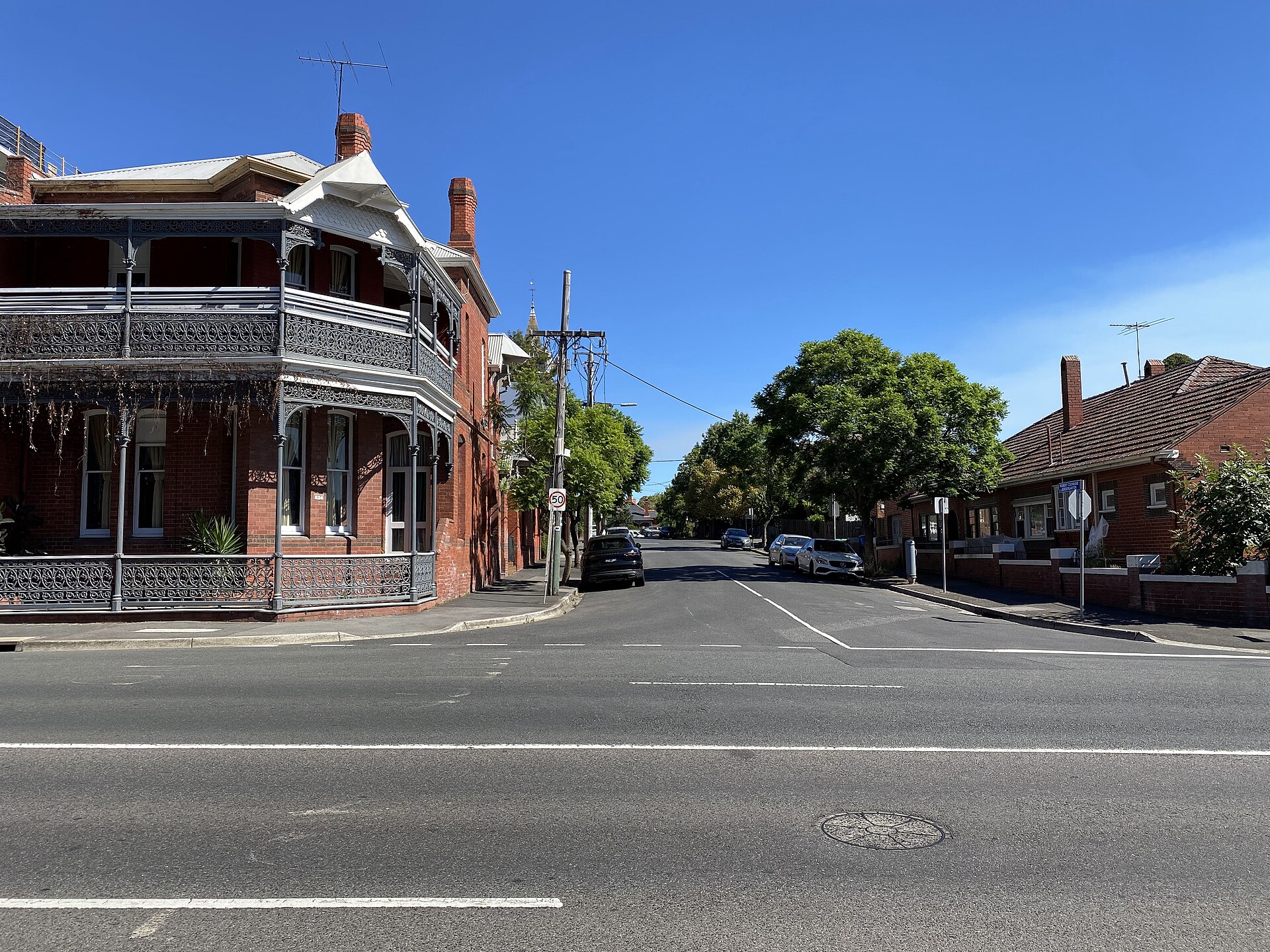
Carlton’s transport game is strong for a suburb with no train station. Trams do the heavy lifting, cycling is genuinely practical, and the CBD is close enough to walk when the weather cooperates. Here’s what your daily commute actually looks like.
Transport Scorecard
| Mode | Available | Quality | Notes |
|---|---|---|---|
| Train | Nearby | Good | No station in Carlton — Melbourne Central and Parliament are closest |
| Tram | Yes | Excellent | Routes 1, 6 (Swanston/Lygon), 96 (Nicholson Street) |
| Bus | Limited | Average | Fills gaps, runs less often than trams |
| Cycling | Yes | Good | Protected lanes on Royal Parade and Swanston Street |
| Walking | Yes | Excellent | CBD in 20-25 minutes on foot |
Getting to the CBD
Carlton has no dedicated train station. This is the single most important transport fact for the suburb. The nearest stations are Melbourne Central (Swanston Street, south end) and Parliament (Spring Street), both reachable in about 10 minutes by tram or 20 minutes on foot.
By tram, you’ll reach the CBD in 10-15 minutes. Services on routes 1 and 6 along Swanston Street run every 5-8 minutes during peak. The 96 tram on Nicholson Street connects to East Brunswick northbound and St Kilda southbound.
The Tram Routes
Routes 1 and 6 (Swanston Street / Lygon Street) — The main north-south arteries. These trams run through the heart of Carlton and straight down into the CBD via Swanston Street. Frequent service, rarely more than a 5-minute wait during peak hours.
Route 96 (Nicholson Street) — Runs along Carlton’s eastern boundary. Connects to East Brunswick, Fitzroy, and continues south through the CBD to St Kilda Beach. Handy for reaching Fitzroy without changing trams.
Cycling
Carlton is genuinely cycleable. The terrain is flat, the distances are short, and the infrastructure is improving. Royal Parade has a protected bike lane that runs from Princes Park into the CBD. Swanston Street’s bike lane connects you directly to the university precinct and beyond.
From Carlton to Flinders Street Station: about 15 minutes by bike. Melbourne Bike Share stations dot the suburb, and secure bike parking is available at most major tram stops.
Driving and Parking
Driving in Carlton is fine for getting out of the suburb but painful for parking within it. Street parking requires council permits in most residential areas ($50-$150 per year). Metered parking on Lygon Street and Faraday Street is expensive and time-limited. The Wilson car park on Lygon Street charges around $4 per hour.
If you’re renting, confirm whether your property includes a car space — they’re not guaranteed, and off-street parking adds $50-$100 per week to your rent in some buildings.
The Verdict
Carlton gets an A- for transport. The tram network is excellent, cycling infrastructure is solid, and the CBD is genuinely walkable. The only thing holding it back from a perfect score is the lack of a train station within the suburb itself — but with Melbourne Central and Parliament both a short tram ride away, that’s a minor inconvenience for most residents.
For the full picture of living here, see our [Carlton cost of living guide](/carlton/cost-of-living/) and our Carlton neighbourhood guide.
Commute times based on PTV data and local testing, March 2026. Got a correction? [email protected]
Explore More of Carlton
- Carlton History
- Carlton Things To Do This Weekend
- Carlton Cheap Eats
- Carlton Rent Guide
- Carlton Date Night Guide
- Carlton Carlton For Retirees
- Carlton New Openings
- Carlton Things To Do
Nearby Suburbs Worth Checking
Transport Snapshot
Carlton has no train station, but it functions like an inner-city transport suburb because trams, walking and cycling cover the gap. The strongest corridor is Swanston Street/Melbourne University, with tram routes 1, 3/3a, 5, 6, 16, 64, 67 and 72 feeding straight into the CBD. Nicholson Street adds route 96 on the eastern edge, useful for trips toward Fitzroy, Collingwood, Southern Cross and St Kilda.
For most Carlton addresses, the CBD is close enough that the train network is optional rather than essential. Melbourne Central and Parliament are the nearest major stations, but many residents will reach central jobs faster by tram, bike or walking than by transferring to rail.
Data-Backed Analysis
ABS 2021 Census data shows Carlton is far less car-dependent than Victoria overall. Only 14.4% of employed Carlton residents drove to work as a driver on Census day, compared with 49.9% across Victoria. Car travel as driver or passenger was 16.4% in Carlton versus 54.5% statewide.
Public transport use was also much higher: 16.2% of Carlton workers used public transport, compared with 4.4% across Victoria. Trams did the heavy lifting, with 8.0% using tram/light rail, more than 13 times the Victorian figure of 0.6%.
Walking is the standout comparison. 13.3% of Carlton workers walked only, compared with 2.3% across Victoria. Cycling was also materially stronger: 3.3% in Carlton versus 0.7% statewide. Treat the 2021 figures as COVID-period data, not a perfect normal-year commute snapshot, but the gap is large enough to confirm the pattern: Carlton is built around short trips, trams and active transport.
Best Ways To Get Around
For CBD trips, use Swanston Street trams if you are west or central Carlton, and Nicholson Street trams if you are closer to Carlton Gardens or Rathdowne Street. A tram into the city is usually the default for office workers, university staff, hospital workers and students.
For Parkville, the University of Melbourne and the hospital precinct, walking or cycling is often faster than waiting for a tram. From much of Carlton, these trips are short enough to make daily car use unnecessary.
For cross-suburb trips, cycling is genuinely practical. Carlton connects well to Parkville, Fitzroy, North Melbourne, Collingwood and the CBD, but tram routes are more radial than orbital. If your week involves lots of east-west movement, check bike routes and parking before relying only on public transport.
Step-By-Step Transport Checklist
- Check your nearest tram spine first: Swanston Street, Lygon/Elgin Street or Nicholson Street. This determines whether your daily trip is CBD-direct or needs a short walk.
- Test the commute at the time you will actually travel. Carlton trams are frequent, but crowding around Melbourne University, hospital shift changes and lecture times can affect comfort.
- Map the walk to Melbourne Central and Parliament, but do not assume the train is faster. For many CBD trips, a tram or bike will beat a walk-transfer-train pattern.
- If you own a car, inspect parking rules before signing a lease or buying. Carlton’s dense apartment and terrace streets mean permit rules, paid parking and limited off-street spaces matter.
- For cycling, check whether the building has secure bike storage. A practical Carlton lifestyle often depends less on car access and more on whether your bike is easy to store and use daily.
Local Tips
Lygon Street is convenient, but the best tram access is often one block away on Swanston or Elgin, depending on your exact address.
Apartments near Melbourne University suit people who walk, cycle or tram daily; car owners should be more selective.
Nicholson Street is underrated if you want Carlton access with easier links to Fitzroy, Collingwood and the 96 tram corridor.
Late-night plans are easier here than in many suburbs because the CBD is close enough for a short rideshare if trams are less convenient.
FAQ
Q: Is Carlton good without a car? A: Yes. The ABS data shows Carlton has much lower car commuting than Victoria overall, and the suburb’s tram, walking and cycling options make car-free living realistic for many residents.
Q: Why doesn’t Carlton have a train station? A: Carlton sits between the CBD rail stations and inner-north tram corridors. In practice, trams, walking and cycling fill the gap, especially for trips to the CBD, Parkville and nearby inner suburbs.
Q: Which tram route is best for Carlton? A: It depends on your street. Swanston Street routes are strongest for CBD and university access, while route 96 on Nicholson Street is better for the eastern side and trips toward Fitzroy, Collingwood and St Kilda.
Source: ABS Census QuickStats — 2021