Verdict Box
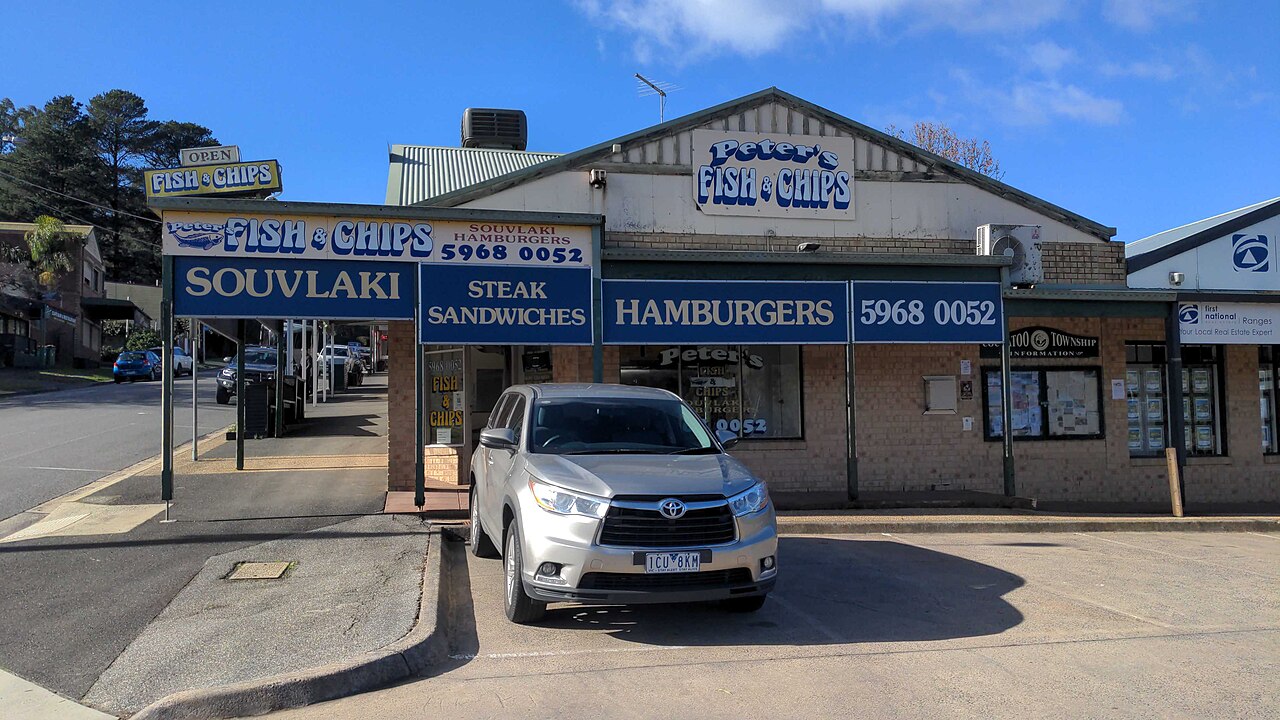
Honest reality: Emerald is a hill-town cafe suburb, not a dense brunch district pretending to be inner Melbourne. The good version is simple: coffee on Belgrave-Gembrook Road, a proper local counter at The General Food Store, a pub fallback at Paradise Valley Hotel, and enough weekend traffic to keep the strip alive. The bad version is also simple: you are car-dependent, listings are thin, and the cafe choice can feel repetitive if you expect laneway rotation every Saturday.
Best for people who want trees, space, regular faces and a slower food rhythm. Skip if you need late-night eating, train-walk convenience or apartment choice. Rent pressure is awkward because scarcity matters more than headline price. Commute reality is Emerald to Belgrave first, then train or drive, and that adds up. Food scene is cosy, useful and small. Family fit is strong if you accept school-run traffic and wet-road driving. Overall score: 7.1/10 for the right person, 4.8/10 for inner-city cafe hunters.
At-a-Glance Table
| Factor | Emerald 2026 |
|---|---|
| LGA | Cardinia Shire Council |
| Postcode | 3782 |
| Geographic tier | South |
| Region | outer-south-east |
| Transport grade | N/A |
| Overall grade | N/A |
Who It Suits
Marcus, 38, hospo-adjacent — wants staff who remember regulars, not a room designed for weekend content. The Hills Family — values parking, space and Saturday breakfast before sport more than late-night options. The Remote Worker — can use the cafes as punctuation, not as a full substitute for office-adjacent choice.
Rent & Property Reality
$530/week is the current median 1-bedroom unit rent, with YoY change not published for that category on REA because Emerald has too few 1-bedroom unit records to build a reliable annual trend. The useful benchmark is REA’s Emerald suburb data: 1-bedroom units sit at $530/week, all units at $525/week, houses at $720/week and houses are up 3.2% over May 2025 to April 2026, according to realestate.com.au’s Emerald market profile.
That number needs interpretation. In a normal apartment suburb, a 1-bedroom median tells you what a renter can expect after inspecting ten similar flats. Emerald is not that. It is a low-supply hills market where the single 1-bedroom listing can set the visible price for the month. REA shows only 3 units available in the past month and 4 leased across the past year for units overall, so the rent figure is a signal, not a deep market. If a clean 1-bed unit appears near the village, it may be priced like a lifestyle rental rather than a budget option.
The practical renter question is not whether Emerald is cheap. It is whether the rent buys you a life you cannot get closer in. For $530 a week, a 1-bed renter is paying for quiet, air, trees and village access, but losing the rental depth of Belgrave, Ferntree Gully, Ringwood or Croydon. For $720 a week, a house renter is buying room and setting, yet still taking on hills maintenance, heating bills, damp winters, leaf litter and car dependence.
The pressure point is scarcity. A suburb with five rentals available last month can punish anyone with a strict move date, a pet, a weak application or a need to stay near a particular school. You do not shop Emerald casually in the way you might browse Richmond or Hawthorn. You watch listings early, inspect fast, and keep nearby suburbs in play. If the cafe-strip lifestyle is the reason you are looking here, budget for the fact that the rental market knows that too.
Local Reality & Pockets
Favour the practical middle of Emerald if you want the cafe life without turning every errand into a drive. The spine around Belgrave-Gembrook Road is where the useful stuff clusters: Over the Road at 371, The General Food Store at 377, Elevations at 374 and Paradise Valley Hotel at 249. Being near that line means morning coffee, takeaway, pub meals and basic social life are close enough to feel part of the week. The trade-off is road movement. Belgrave-Gembrook Road is not a sleepy cul-de-sac; expect busier weekend traffic, motorcycle noise, tourist movement toward Puffing Billy country and tighter parking near peak brunch hours.
Kilvington Drive, where Incy Wincy sits, gives a slightly more everyday local feel. It can suit families who want to be near schools, services and short-hop errands, but you still need to check the specific street. In Emerald, distance on a map lies. A house that looks close can involve a steep walk, poor shoulder, limited lighting or a wet-weather road that makes the school run less charming by July.
Be careful with properties set further out toward Emerald-Monbulk Road, Macclesfield Road and the more treed edges if your week depends on fast commuting. They can be beautiful, but beauty is not the same as convenience. You may gain privacy and lose mobile reception consistency, walkability and easy after-dark access. Parking is usually better on larger blocks, but village parking can still get pinched around breakfast, school pickup and weekend visitors.
Transport is the big honest gotcha. Emerald does not have its own Metro train station, so most public-transport lives are built around getting to Belgrave first. If you work in the CBD, the commute is a chain, not a straight line. The second gotcha is climate and maintenance. Hills homes can mean damp, mould risk, drainage issues, fallen branches, colder mornings and higher heating demand. Inspect gutters, driveway gradient, retaining walls and winter sun as seriously as you inspect the kitchen.
Signature Craving
The order that tells you whether Emerald works for you is not a viral dish. It is coffee and breakfast at The General Food Store on Belgrave-Gembrook Road, then deciding whether the village pace feels comforting or limiting. That is the signature craving here: a reliable counter, familiar faces, and food you can repeat without needing a new opening every fortnight. Over the Road gives you another cafe option almost next door, which matters in a suburb this compact, while Paradise Valley Hotel covers the pub-meal lane when you want less brunch and more dinner. The honest verdict: Emerald’s food appeal is repetition done well, not endless choice. If you need novelty, you will start driving. If you like having a small rotation that becomes part of your week, Emerald makes more sense than the map suggests.
Comparisons Table
| Suburb | Transport | Tier | Region |
|---|---|---|---|
| Emerald | N/A | South | outer-south-east |
| Avonsleigh | F | South | outer-south-east |
| Bayles | n/a | South | outer-south-east |
| Beaconsfield | C+ | South | outer-south-east |
Trust Block
Author: Marcus Cole — Long-time Melbourne local who eats his way through the inner-east. Property cynic.
Data: data/melbourne_suburbs_master.json (Codex per-LGA enumeration, cross-checked vs VEC + Australia Post + ABS SA2 boundaries), data/suburb_scores.json (composite percentile grades), data/venues/.json (OpenStreetMap + Gemini-verified venue catalog).
Last reviewed: 2026-05-26. Not financial advice. We do not accept paid placements in editorial.
FAQ
Q: Is Emerald actually good for cafes in 2026? A: Yes, but only if your definition of good is realistic. Emerald has a compact cafe strip rather than a deep dining scene. The useful cluster is around Belgrave-Gembrook Road, with The General Food Store, Over the Road and Elevations sitting close together, plus Incy Wincy over on Kilvington Drive. That gives locals enough breakfast and coffee choice for normal weeks. It does not give you the constant new-opening cycle of inner Melbourne, and that is the point. Emerald suits repeat visits, not restless cafe chasing.
Q: Which part of Emerald should renters favour for cafe access? A: Renters who care about cafes should start around the village side of Belgrave-Gembrook Road, then widen the search carefully. Being close to the main strip means coffee, breakfast, pub meals and basic errands do not require a full drive every time. The catch is that the same strip brings more road noise, visitor parking pressure and weekend movement. If you go further out for quiet, check the actual walking route before signing. Hills distance can look short online and feel impractical in rain or darkness.
Q: Is Emerald expensive for renters? A: Emerald is not cheap in the way outer-suburb distance might suggest. REA data shows a 1-bedroom unit median of $530/week, all units at $525/week and houses at $720/week for May 2025 to April 2026. The bigger issue is supply. With very few units and limited rentals overall, a renter cannot rely on abundant comparable listings. Scarcity can make the process more stressful than the median implies, especially if you have pets, need a quick move or want a specific pocket near the village.
Q: Can you live in Emerald without a car? A: Technically, some people can manage it, but most renters and buyers should treat Emerald as car-dependent. The suburb has local cafes and services, yet it does not have its own Metro train station. Many commutes involve getting to Belgrave first, then taking the train. That extra step matters during winter, school traffic and late finishes. If you are considering a car-light life, test the exact route from the property to coffee, groceries, bus stops and Belgrave Station before relying on the idea.
Q: What are the main downsides of living near Belgrave-Gembrook Road? A: Belgrave-Gembrook Road gives you the convenience people often want from Emerald, but it also carries the suburb’s most obvious friction. Expect more through-traffic, weekend visitors, motorcycle noise, school-hour movement and occasional parking squeeze near the cafe cluster. The road is useful, not tranquil. If a listing is right on or just off it, inspect at breakfast time, late afternoon and a wet evening if possible. A quiet Tuesday inspection can understate how the strip behaves when the town is actually awake.
Q: Is Emerald better for families or singles? A: Emerald leans more naturally toward families, couples and remote workers than singles who want a dense social calendar. Families get space, local routines, schools nearby and weekend breakfast without driving into a major centre. Singles can like it if they value quiet and already have social networks elsewhere, but the suburb will not manufacture nightlife or constant casual dining. A single renter should be honest about whether they want solitude with good coffee or whether they are trying to force an inner-east lifestyle onto a hills address.
Q: How does Emerald compare with Belgrave for food and transport? A: Belgrave is usually the stronger choice if transport is the deciding factor because it has the train station and a more obvious commuter base. Emerald feels more village-like and residential, with a smaller cafe rhythm and more dependence on the car. For food, Emerald covers breakfast, coffee, pub meals and casual takeaway, while Belgrave gives you broader nearby options and easier connection to the rail network. If you love Emerald’s quieter setting, the trade is worthwhile. If commuting is fragile, Belgrave may be the more practical call.
Q: What should I inspect carefully in an Emerald rental? A: Inspect the house as a hills property, not just a rental with trees. Check for damp smells, mould marks, gutter condition, drainage, driveway steepness, retaining walls, heating capacity and whether rooms get winter sun. Ask about internet reliability and mobile reception, because some treed pockets can be inconsistent. Also test the parking situation if the property is near the village. A charming rental can become tiring if every storm brings branch debris, every winter morning feels cold, and every errand needs a car shuffle.
Q: Is Emerald worth it just for the cafe lifestyle? A: Only if the cafe lifestyle you want is local and repetitive in a good way. Emerald is worth it when you enjoy having a few reliable places, seeing familiar staff and folding coffee into a quieter hills routine. It is not worth paying a scarcity premium if you mainly want variety, late dining, easy trains and a new brunch room every month. The strongest version of Emerald is not performative. It is breakfast, school traffic, wet roads, familiar counters and a slower week that you have deliberately chosen.