
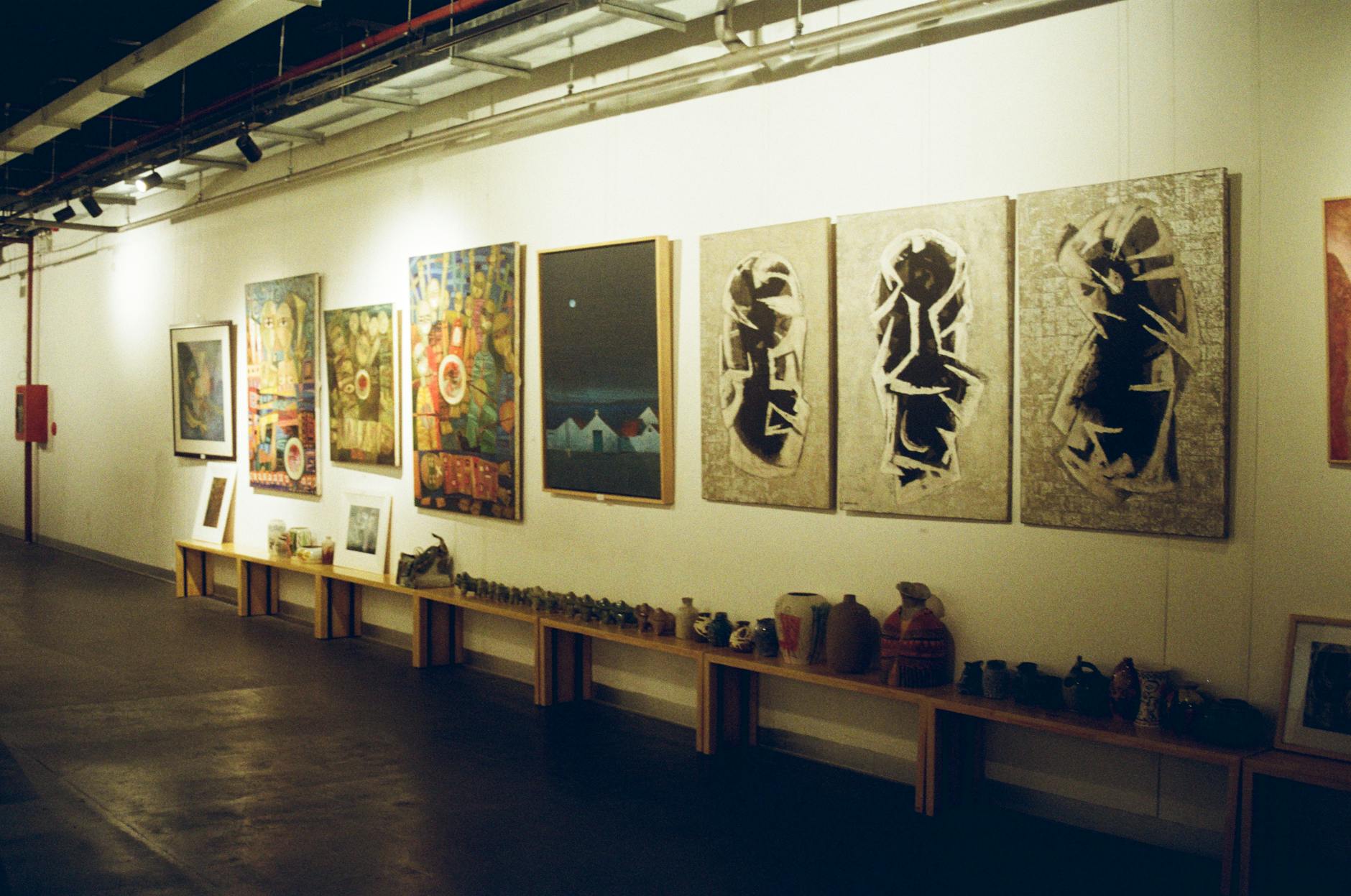
Fitzroy has been Melbourne’s creative engine for decades. Not because anyone planned it that way, but because cheap rent in old warehouses attracted artists, musicians moved in after them, and eventually a whole culture grew up around the idea that making things matters more than making money. The rent isn’t cheap anymore — that ship sailed years ago — but the infrastructure those earlier generations built is still standing, and it still works.
Here’s what the arts and culture scene actually looks like in 2026, from someone who lives here and pays attention.
Gertrude Street: The Gallery Corridor
Gertrude Street runs parallel to Johnston Street, one block north, and it has functioned as Fitzroy’s gallery spine since the 1980s. The concentration of artist-run spaces along this stretch is unusual for a residential street, and that tension between domestic life and contemporary art gives the whole strip its character.
Gertrude Contemporary remains the anchor. Operating from its Gertrude Street address, this artist-run initiative has been presenting ambitious contemporary art since 1985 — longer than most Melbourne galleries of any kind. Their programming leans toward experimental installation, video, and interdisciplinary work. Shows rotate roughly every six weeks, and the quality stays remarkably consistent. If you only visit one gallery in Fitzroy, make it this one. Check their website for opening times; they keep odd hours compared to commercial galleries.
Beyond the major spaces, Gertrude Street rewards slow walking. Smaller project spaces and studios open and close with the seasons, and you’ll find more if you look up — several operate from first-floor rooms above shops. Saturday afternoons are the best time to wander; that’s when most spaces coordinate their openings.
For more on what’s happening around the neighbourhood, check out our Fitzroy things to do this weekend guide — we update it weekly.
Brunswick Street: Street Art That Actually Says Something
Brunswick Street gets more foot traffic than Gertrude Street, and the art that covers its walls reflects that energy. The murals between Johnston Street and Alexandra Parade are the densest concentration, and they’ve become one of Melbourne’s most photographed strips of street art for good reason.
But here’s what matters: this isn’t decoration. Fitzroy’s street art has always carried political weight. The walls along this stretch have addressed Indigenous land rights, housing affordability, refugee policy, and environmental destruction — sometimes all in the same laneway. Works get painted over, new ones appear, and the whole surface stays in conversation with itself. That turnover is the point. If you visited six months ago, at least half the walls will look different now.
The best approach is to walk the full stretch of Brunswick Street from Johnston Street north to Alexandra Parade, then cut through the side streets heading east. The laneways between Brunswick and Napier Streets hold some of the most interesting smaller-scale work — stencils, paste-ups, and pieces that would get buffed on a main road but survive here because the laneway culture protects them.
If you’re interested in how Fitzroy compares to other creative pockets around Melbourne, our Collingwood neighbourhood guide covers the scene just next door.
Live Music: The Tote, The Old Bar, and Why Fitzroy Still Matters
Melbourne’s live music reputation was built in suburbs like Fitzroy, Collingwood, and St Kilda during the late 1970s and 1980s. The pub rock circuit that produced bands like The Birthday Party, The Saints (in their Melbourne years), and later The Drones ran through venues in these postcodes. Fitzroy’s contribution to that history is significant, and two venues in particular carry that legacy forward.
The Tote, at 71 Johnston Street, has been operating since the mid-1980s and remains one of the most important small music venues in Australia. It survived a near-closure in 2010 that triggered city-wide protests and changes to Victorian liquor licensing laws. The room is loud, the sound is raw, and the booking policy still favours aggressive, unpolished music — punk, noise, garage, post-punk, and whatever falls between those labels. If you want to understand what Melbourne live music actually sounds like at street level, The Tote is where you go. Shows most nights; door prices stay reasonable.
The Old Bar, also on Johnston Street, operates in a slightly different register. The room is smaller and the booking policy is broader — you’ll find indie, folk, experimental electronic, and genre-defiant stuff on any given week. It’s the kind of venue where you can walk in not knowing the band and walk out genuinely changed by what you heard. The bar itself is unpretentious in the best way: no cocktail menu, no ambiance engineering, just drinks and music.
These two venues sit within walking distance of each other on Johnston Street, which means a Friday or Saturday night in Fitzroy can involve catching sets at both without ever needing a tram. That kind of density is rare and worth protecting.
For a deeper look at Fitzroy after dark, including venues beyond the music scene, see our [Fitzroy nightlife guide](/fitzroy/nightlife-guide/).
Rose Street Artists’ Market
Rose Street Artists’ Market, at 60 Rose Street, runs every Saturday and Sunday and has been a fixture since 2003. What sets it apart from other weekend markets is the rule that stallholders must be the makers — no resellers, no dropshipped stock. You’re buying directly from the person who made the thing, and you can talk to them about it.
The quality varies, as it does at any market, but the best stalls sell ceramics, prints, jewellery, textiles, and small-batch skincare that you won’t find in retail shops. It’s also a useful barometer for what Fitzroy’s creative community is actually making right now. If you notice five different stallholders working with recycled materials or native botanicals, that’s not a coincidence — it’s a reflection of where the local maker culture is heading.
Go early on Saturday for the best selection. Sunday afternoons are quieter, which is either a benefit or a drawback depending on your tolerance for crowds.
The Bigger Picture: Why Fitzroy’s Scene Holds Up
The obvious criticism of Fitzroy in 2026 is that gentrification has hollowed out the conditions that produced the culture in the first place. There’s truth in that. Studio rents have pushed plenty of artists further out — to Footscray, to Sunshine, to the outer suburbs. But the institutions that remain — Gertrude Contemporary, The Tote, The Old Bar, Rose Street Artists’ Market — have survived because they’re run by people who genuinely care about the work, not just the real estate.
Fitzroy’s arts scene isn’t what it was in 1990, and it shouldn’t try to be. What it offers now is a concentration of well-run, independent cultural spaces within a few walkable blocks, backed by a street art culture that keeps the public surfaces alive and politically engaged. That’s worth something.
The suburb still takes creative work seriously. You can feel it in the way venues are programmed, in the quality of what appears on gallery walls, and in the fact that Rose Street Market stallholders can still make a living selling handmade work directly to the public. Not every Melbourne suburb can say that.
Frequently Asked Questions
Where is the best street art in Fitzroy? The highest concentration is along Brunswick Street between Johnston Street and Alexandra Parade, and in the laneways running east toward Napier Street. Side streets off Brunswick Street in this section have smaller, more political work that’s worth seeking out.
Is The Tote still open in 2026? Yes. The Tote at 71 Johnston Street continues to operate as a live music venue, with shows most nights of the week. It survived its well-documented near-closure in 2010 and has been going strong since.
When is Rose Street Artists’ Market open? Every Saturday and Sunday. Doors typically open at 10am and close at 4pm, though hours can shift for special events. Saturday mornings have the best selection; Sunday afternoons are the least crowded.
Is Fitzroy good for art galleries? Gertrude Street has one of Melbourne’s strongest concentrations of contemporary art spaces, anchored by Gertrude Contemporary. The galleries here lean toward experimental and contemporary work rather than commercial art sales, so expect challenging programming.
How do I get to Fitzroy? The 86 tram along Smith Street and the 11 tram along Brunswick Street are the most direct routes from the CBD. There’s limited street parking, so public transport is the better option. For full transport details, check our Fitzroy transport guide.
Can I do a self-guided street art walk? Absolutely. Start at the corner of Johnston and Brunswick Streets, walk north along Brunswick Street to Alexandra Parade, then loop back through the side streets. Allow at least an hour if you want to look properly. No guide or map needed — the art is everywhere and clearly visible.
Verdict
Fitzroy’s culture scene has thinned at the edges but held firm at its core. The galleries on Gertrude Street are programming better than ever, The Tote and The Old Bar continue to book live music with genuine conviction, and the street art along Brunswick Street still carries political and artistic weight. Rose Street Artists’ Market proves that maker culture can survive in an expensive suburb if the model is right. Skip the tourist-oriented experiences and spend your time in these spaces instead — they’re the real thing.
Explore More of Fitzroy
- Fitzroy History
- Fitzroy Things To Do This Weekend
- Fitzroy Cheap Eats
- Fitzroy Rent Guide
- Fitzroy Suburb Roast
- Fitzroy Date Night Guide
- Fitzroy New Openings
- Fitzroy Things To Do
💬 Discussion
Join the conversation — no account needed