
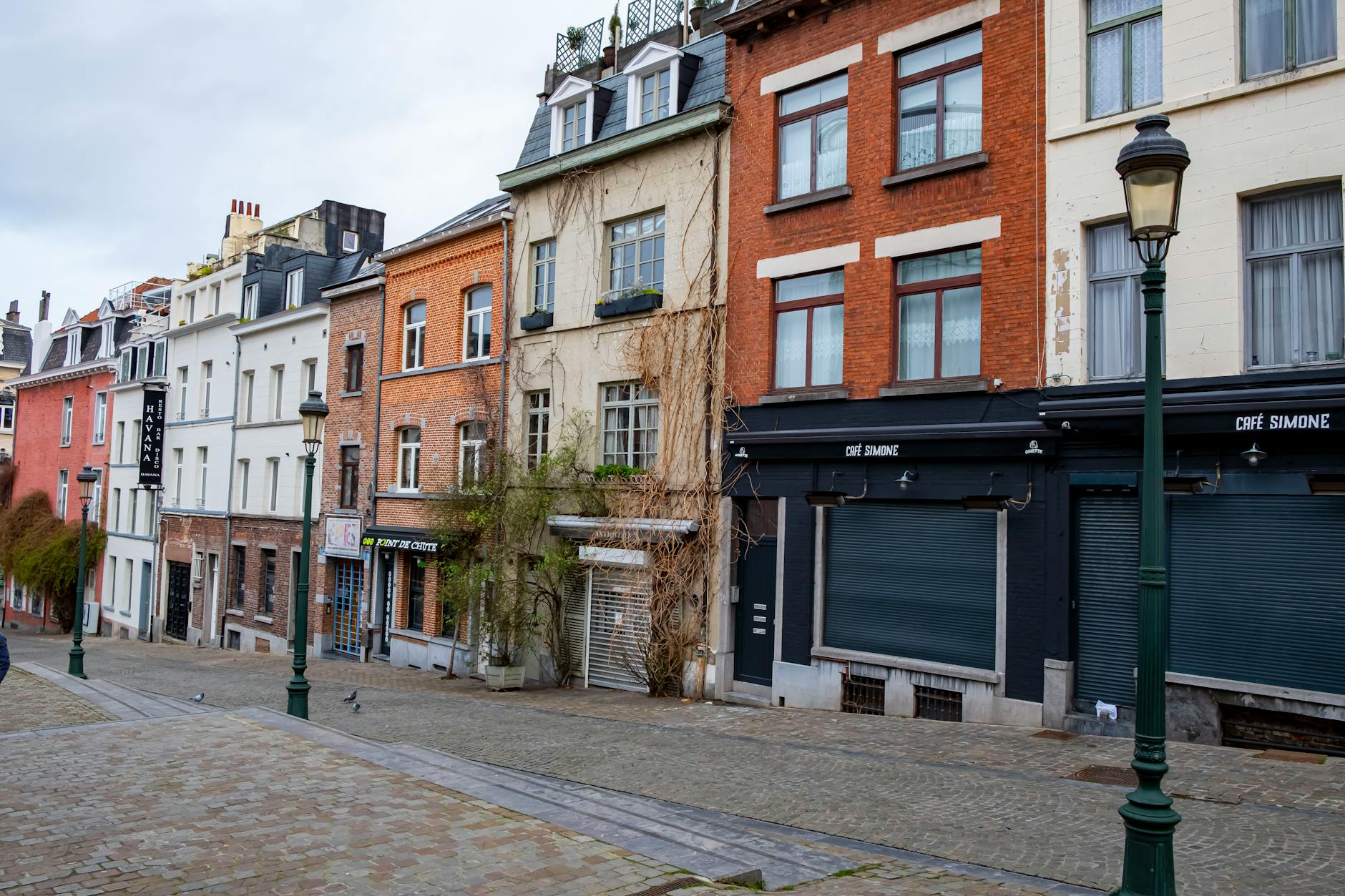
Fitzroy was Melbourne’s first suburb. Proclaimed in 1839 — just four years after Melbourne itself — it was carved from the land of the Wurundjeri people of the Kulin Nation, who had lived along the Merri Creek and Yarra River for tens of thousands of years. That history predates everything that follows and should be acknowledged first.
1839–1900: The Working Suburb
Fitzroy was laid out as a residential grid north of the infant Melbourne settlement. By the 1850s, the gold rush had flooded Victoria with immigrants and Fitzroy absorbed thousands of them. The street grid between Nicholson and Smith Streets filled with workers’ cottages and double-fronted terraces — the same buildings that sell for $1.5 million today.
The suburb was working-class from the start. Boot factories, tanneries, and breweries lined Johnston Street and Smith Street. The workers who staffed them lived on the surrounding streets — Gore, Napier, George, Moor. The pubs arrived early: the Napier Hotel, the Rose Hotel, and the Rainbow Hotel were all established by the 1860s and still serve beer today.
By 1900, Fitzroy was Melbourne’s most densely populated suburb. It was also one of the poorest. The terraces that look charming now were cramped, poorly ventilated, and shared between multiple families. Infant mortality rates in Fitzroy were among the highest in the colony.
1900–1950: Poverty and Community
Fitzroy spent the first half of the 20th century as one of Melbourne’s most disadvantaged suburbs. The 1930s Depression hit hard. The housing stock deteriorated. The suburb developed a reputation for poverty, crime, and overcrowding that persisted for decades.
But community life was strong. The Fitzroy Football Club (founded 1883) was the suburb’s sporting identity. St Patrick’s Cathedral (nearby in East Melbourne) anchored the Irish Catholic community. The pubs were living rooms. Neighbours knew each other because they had no choice — the terraces shared walls, and the back lanes were common ground.
1950s–1970s: Migration and Public Housing
Post-war migration transformed Fitzroy. Italian, Greek, and later Vietnamese and Turkish families settled in the suburb, drawn by cheap rent and established migrant networks. Johnston Street became a hub of Spanish and South American businesses. Victoria Parade’s Vietnamese restaurants date from this era.
In the 1960s, the Victorian Housing Commission demolished blocks of terraces and replaced them with the high-rise public housing towers that still stand today. Atherton Gardens (1968) on Brunswick Street and the towers on Gertrude Street and Napier Street brought social housing residents into the suburb in large numbers. The towers were controversial then and remain so — they’re ageing infrastructure, but they’re also home to tight-knit communities.
1970s–1990s: Punk, Pubs, and the Creative Shift
Cheap rent and proximity to the city attracted artists, musicians, and students through the 1970s and ’80s. Fitzroy became the epicentre of Melbourne’s pub rock and post-punk scenes. The Crystal Ballroom on Brunswick Street hosted The Birthday Party, The Go-Betweens, and countless local bands. Nick Cave lived on Gertrude Street. The Tote (opened 1980 on Johnston Street) became a temple for punk and alternative music.
Brunswick Street evolved from a working-class shopping strip to a bohemian high street. The Black Cat cafe, Mario’s, and the Vegie Bar (opened 1994) defined the strip’s identity. Second-hand bookshops, record stores, and artist studios moved into shopfronts that had been boot-makers and haberdashers.
This was the era that created the “Fitzroy” that people romanticise — cheap, creative, unpredictable, and resistant to anything corporate.
2000s–Present: Gentrification
The same qualities that attracted artists — character housing, walkability, proximity to the CBD — attracted professionals with larger budgets. Property prices began climbing in the early 2000s and haven’t stopped. The median house price crossed $1 million around 2015 and sits above $1.5 million in 2026.
The gentrification of Fitzroy has been documented extensively and argued about even more. What’s undeniable:
- What arrived: Cutler & Co. (2009), Naked for Satan (2010), Lune Croissanterie (2015), Poodle Bar & Bistro (2022). A restaurant and bar scene that rivals any suburb in Australia.
- What left: Affordable housing, many of the migrant-run shops on Johnston Street, the milk bars, the cheap studios that made the creative scene possible in the first place.
- What remains: The public housing towers, the Napier Hotel, the Tote, Edinburgh Gardens, and a community that — despite the changes — still shows up for each other.
The tension between old and new Fitzroy is the suburb’s defining characteristic. The $2.5 million terrace renovation and the Commission flat share the same postcode — 3065. The $24 crème caramel at Poodle and the $9.50 banh mi at N Lee Bakery are 400 metres apart. Fitzroy holds both without resolving the contradiction.
What’s Next
Fitzroy has no room to expand. The heritage overlays prevent large-scale demolition. The public housing towers are state-owned and not going anywhere. What changes now is incremental — shop tenancies turning over, apartment buildings filling vacant lots, and the ongoing negotiation between preservation and evolution.
The suburb’s future depends on whether the things that make it worth living in — the community, the culture, the diversity — survive alongside the rising property values. History suggests they’ll adapt. History also suggests something will be lost in the process.
More from Fitzroy: Neighbourhood Guide · Suburb Guide · Hidden Gems
Researched from local historical records, City of Yarra archives, and long-term resident interviews. March 2026.
Explore More of Fitzroy
- Fitzroy Things To Do This Weekend
- Fitzroy Cheap Eats
- Fitzroy Rent Guide
- Fitzroy Suburb Roast
- Fitzroy Date Night Guide
- Fitzroy New Openings
- Fitzroy Things To Do
- Fitzroy Cost of Living
💬 Discussion
Join the conversation — no account needed