Verdict Box
Flinders is a coastal village first and a Melbourne suburb only on paper. It sits on the Mornington Peninsula, around 70-plus kilometres from the CBD depending on the route, and its daily rhythm is shaped by Cook Street, Western Port, Flinders Pier, the golf course, the ocean beach, and nearby rural land rather than by trains, office towers, or shopping-centre convenience.
The honest 2026 verdict: Flinders is excellent for people who already know they want the slow end of Peninsula life. It is poor value for anyone trying to stretch an ordinary metro budget, rely on public transport, or keep a regular CBD commute painless. The suburb has real local assets, including Mushroom Reef Marine Sanctuary, Flinders Hotel, Moke Dining, Georgie Bass Cafe & Cookery, Flinders General Store, Cook Street Collective, and the pier precinct. It also has real constraints: thin rental supply, high buying costs, limited late-night options, limited medical and retail depth, and a lifestyle that assumes you have a car.
This is not the place to move because a weekend visit felt calm. Visit on a winter weekday, check the bus timetable, price groceries and fuel, test the drive to Frankston or Rosebud, and look at how few rentals are actually available. If it still feels right after that, Flinders can be a very good long-term base.
At-a-Glance Table
| Factor | 2026 reality |
|---|---|
| Location | Western Port side of the Mornington Peninsula, within Mornington Peninsula Shire |
| Postcode | 3929 |
| Population signal | Small town scale; ABS 2021 recorded Flinders at about 1,130 residents |
| Main street | Cook Street, with cafes, hotel dining, general store, gallery, and local services |
| Transport | Car-first; PTV route 782 connects Flinders with Frankston via Hastings and Coolart Road |
| Beach and nature | Flinders Pier, Flinders Ocean Beach, Mushroom Reef Marine Sanctuary, coastal walks |
| Property feel | Detached homes, coastal holdings, holiday houses, low rental turnover |
| Best for | Downsizers, remote workers, weekenders, sea-change buyers, Peninsula lifers |
| Hardest for | Daily CBD commuters, renters needing choice, teenagers relying on frequent public transport |
Who It Suits
The Saltwater Downsizer — wants a smaller town, morning walks near the pier, a real local main street, and does not need a train station.
Amelia, 41, remote-first consultant — can work from home most days, drives for errands, and values quiet weekdays more than late-night choice.
The Peninsula Weekender — wants a base near golf, Western Port, Cape Schanck, Red Hill wineries, and long lunches without pretending it is inner-suburban.
The Practical Retiree — likes the pace but has checked medical access, home maintenance costs, and the drive to larger services before buying.
Rent & Property Reality
Flinders property is shaped by scarcity. There are not many dwellings, there is a meaningful weekender and prestige-buyer layer, and the rental market can be too thin for neat median numbers to tell the whole story. When a suburb has few rentals, a single coastal house or short lease can skew the advertised picture. That is why live listing checks matter more here than broad Melbourne averages.
For current property data, start with the Flinders suburb profile on realestate.com.au and cross-check against Domain’s Flinders profile. REA’s recent suburb-profile snapshot has shown houses renting around $900 per week and units around $650 per week, but the more important point is stock: there may be very few options at any one time. If you need a rental by a fixed date, Flinders is a risky target unless you also search Shoreham, Balnarring, Merricks, Red Hill, Rosebud, Hastings, and larger Peninsula centres.
Buying is a different calculation. Flinders attracts people who want coastal calm without the busier Port Phillip side of the Peninsula. Larger blocks, water proximity, older village homes, renovated weekender stock, and prestige properties can all sit in the same search area. A buyer coming from inner Melbourne may see the space as generous; a buyer comparing against Hastings or Bittern may see the pricing as stretched.
The practical property questions are plain. Is the house holiday-maintenance heavy? How exposed is it to coastal weather? Is the garden manageable? Can trades reach you without Peninsula pricing? Is the driveway and street access comfortable in summer visitor periods? Are you buying a permanent home or a fantasy weekend version of yourself? Flinders rewards buyers who answer those questions before bidding.
For renters, the best strategy is flexibility. Be ready to inspect quickly, have references prepared, and decide whether you can accept a nearby suburb if nothing suitable appears in Flinders itself. For buyers, treat days on market carefully: some homes are unique and expensive, not necessarily overpriced, while others test the emotional sea-change premium.
Local Reality & Pockets
Cook Street is the anchor. It is where you find the hotel, cafes, general store, gallery activity, small shops, and the feeling of a town centre. Living close to Cook Street gives you the most walkable version of Flinders, although “walkable” here means village errands and coffee, not a full-service urban life. You still drive for larger supermarkets, many appointments, and most secondary-school or work trips.
The pier and foreshore side is the postcard zone, but it is also where visitor traffic matters. Flinders Pier has long been a draw for fishing, diving, walking, and marine life interest. The nearby parking and foreshore areas can feel very different on a calm winter weekday compared with summer, school holidays, or a clear long weekend. If you are buying near the visitor routes, inspect at peak times.
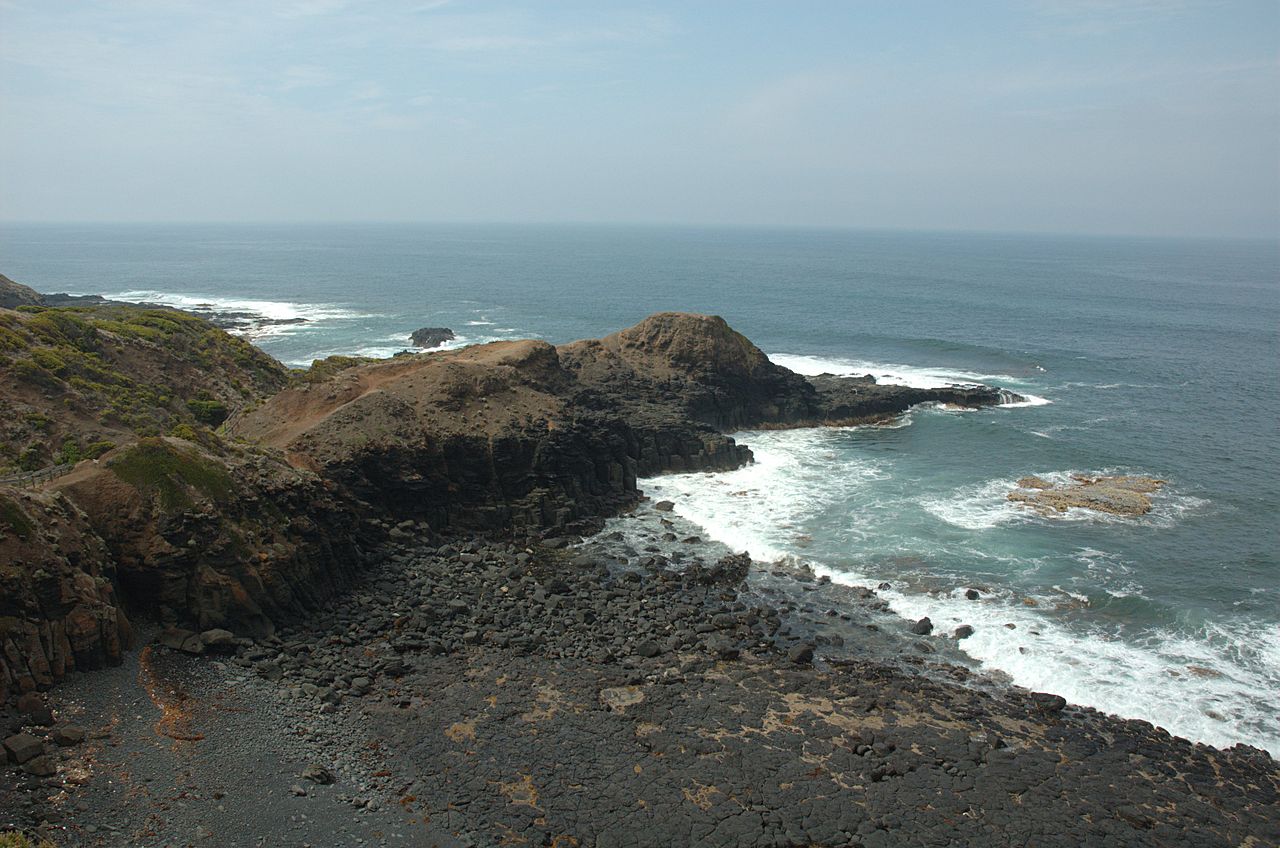
Toward the golf course and ocean beach, the lifestyle becomes more landscape-driven. Flinders Golf Club, the cliff and ocean outlooks, and the approach to Mushroom Reef create the wilder side of the town. Parks Victoria describes Mushroom Reef Marine Sanctuary as an 80-hectare protected area at Flinders, with rockpools, snorkelling, diving, and a strict no-take environment. That is a genuine asset, but it comes with responsibility: this is not a place for casual collecting, fishing inside the sanctuary, or ignoring tide and swell conditions.
The inland edges feel more rural and private. They can be beautiful, but they add maintenance, driving, drainage, fencing, fire-season preparation, and service-access questions. The more acreage or garden you buy, the more your lifestyle depends on time, money, and reliable trades.
Daily convenience is the trade-off. Flinders has useful local venues but not the depth of Mornington, Rosebud, Hastings, or Frankston. You are choosing a small-town setting. That means quieter nights, fewer errands on foot, limited transport redundancy, and a stronger need to plan around opening hours.
Signature Craving
The Flinders craving is not a single dish; it is the Cook Street to pier loop. Start with coffee or brunch, walk the village strip, drop toward the water, and time the reef or pier visit around conditions rather than forcing it.
For a named local anchor, Moke Dining is the sit-down choice when you want a more considered meal in town. It is on Cook Street and has built its identity around local growers, small producers, and Peninsula dining rather than generic coastal takeaway. For a more casual day, Georgie Bass Cafe & Cookery and Flinders General Store help make the village work for breakfast, lunch, supplies, and the small rituals residents actually repeat.
The key is expectation. Flinders is not a strip of endless venues. It is a compact food-and-coffee scene where a few places carry a lot of weight. That can feel personal and easy if you like routine; it can feel limited if you need a new option every night.
Comparisons Table
| Suburb | Compared with Flinders | Better fit if you want | Watch-outs |
|---|---|---|---|
| Shoreham | Smaller and even quieter, with less of a main-street feel | Privacy, beach access, rural-coastal calm | Fewer services and less village infrastructure |
| Red Hill | Inland, food-and-wine focused, more hinterland than pier town | Wineries, farmgate energy, larger lifestyle blocks | Tourist traffic, hill roads, premium acreage pricing |
| Main Ridge | More rural and spread out, with strong lifestyle-property appeal | Space, privacy, gardens, Peninsula hinterland feel | Car dependence and property-maintenance load |
| Balnarring | More practical for shops and everyday errands | Supermarket access, family convenience, broader housing choice | Less dramatic pier-and-reef identity than Flinders |
Trust Block
Author: Tom Obrien
Method: This guide was rewritten from scratch for 2026 using suburb-specific checks across ABS Census material, current property-profile sources, Mornington Peninsula Shire context, PTV route information, Parks Victoria material for Mushroom Reef Marine Sanctuary, and named local venue verification.
Locality note: Flinders is often described as part of greater Melbourne in datasets, but daily life is Peninsula village life. Treat CBD-distance claims, rental medians, and generic Melbourne affordability statements with caution.
Data caution: Small suburbs produce noisy rental and sales signals. Always check live listings, recent sold results, and current transport timetables before making a housing decision.
FAQ
Q: Is Flinders a good place to live in 2026?
Yes, if you want a small coastal village and you can afford the property and car dependence. It is strongest for downsizers, remote workers, retirees, and people already attached to the Western Port side of the Peninsula. It is weaker for commuters, renters needing options, and households needing frequent public transport.
Q: Is Flinders safe?
The everyday feel is quiet, but safety should not be judged from atmosphere alone. Check current Victoria Police crime data for the local area, inspect at night, and look at the specific street. In small towns, amenity, isolation, road safety, and emergency access matter as much as headline crime impressions.
Q: How far is Flinders from the Melbourne CBD?
It is roughly 70-plus kilometres by road depending on start and route. Off-peak driving can be manageable for occasional trips, but peak traffic and holiday traffic can change the experience. Treat it as a Peninsula base, not a practical daily CBD suburb.
Q: Can you live in Flinders without a car?
Most people would find that difficult. PTV bus route 782 links Flinders with Frankston via Hastings and Coolart Road, but the suburb is not train-served and daily errands often require driving. A car is close to essential for work, shopping, health appointments, and flexible social life.
Q: What is Flinders known for?
Flinders is known for Cook Street, Flinders Pier, Mushroom Reef Marine Sanctuary, Flinders Golf Club, coastal walks, diving and snorkelling conditions when suitable, and a compact village dining scene led by venues such as Moke Dining, Georgie Bass Cafe & Cookery, Flinders Hotel, and Flinders General Store.
Q: Is Flinders expensive?
Yes, in practical terms. Even when a headline median looks uncertain because of low stock, the suburb is constrained, coastal, and desirable. The bigger issue is choice: there may be few rentals or sale listings that match a normal budget, and larger or renovated homes can sit in a premium bracket.
Q: Is Flinders good for families?
It can work for families who want space, coast, and a slower pace, but schooling, transport, sport, part-time jobs, and teenage independence need careful planning. The suburb is not as easy as larger centres with more buses, shops, and services.
Q: Where do locals go for shops and services?
Cook Street covers some daily needs, coffee, meals, and small supplies. For broader supermarket shopping, medical services, hardware, and larger retail, residents commonly look to other Peninsula centres such as Balnarring, Hastings, Rosebud, Mornington, or Frankston depending on the errand.
Q: Is Flinders better than Shoreham?
Flinders has more of a village centre and stronger named-venue presence. Shoreham can feel quieter and more residential-rural. If you want a walkable coffee-and-pier routine, Flinders usually wins. If you want even less activity and do not need a main street, Shoreham may suit better.
Q: Is Flinders good for a weekend house?
Yes, and that demand is part of the price pressure. It works well for people who want golf, food, reef walks, the pier, and access to Red Hill, Cape Schanck, and other Peninsula stops. The caution is maintenance: coastal houses still need care when you are not there.
Q: What should buyers inspect before committing?
Check drainage, roof and window condition, salt exposure, heating and cooling, driveway access, garden maintenance, mobile reception, internet options, summer traffic, and the distance to your most-used services. Also inspect during poor weather, not only on a perfect coastal day.
Q: Is Mushroom Reef suitable for casual visitors?
Yes, but only with respect for conditions and rules. Parks Victoria identifies Mushroom Reef Marine Sanctuary as a protected no-take area, so fishing, collecting, or damaging plants, animals, shells, and artefacts is not allowed. Tide, swell, footwear, and supervision matter around rock platforms.