Verdict Box
Best for: retirees who want inner-city access without living in the CBD, can manage some traffic noise, and value short trips to cafes, trains, trams and medical services in neighbouring suburbs. Skip if: you need flat, quiet, car-easy living. Kensington has lovely pockets, but it is crossed by big roads, rail lines and apartment-heavy streets where lift access and parking vary wildly. Rent pressure: not gentle. One-bedroom units are still cheaper than many inner-north names, but competition is real and newer stock often prices like a city-fringe apartment. Commute reality: very good if you use trains or trams; less relaxing if you drive at peak hour around Racecourse Road, Macaulay Road or Epsom Road. Food scene: small but useful, with real local anchors rather than a huge dining strip. Retirement fit: strong for active, independent retirees; weaker for people who need silence, big supermarkets at the door, or easy visitor parking. Overall score: 7.4/10.
At-a-Glance Table
| Factor | Kensington 2026 |
|---|---|
| LGA | Melbourne City Council |
| Postcode | 3031 |
| Geographic tier | Inner |
| Region | inner-cbd |
| Transport grade | N/A |
| Overall grade | N/A |
Who It Suits
Elaine, 69, train-first downsizer — wants the CBD close but refuses to live in a tower canyon. The Practical Retiree Couple — happy in a compact apartment if shops, cafes and appointments are easy to reach. Ravi, 73, still socially mobile — values walking to coffee, tram links and quick visits to family across the inner north-west.
Rent & Property Reality
The clearest current rental anchor is this: Kensington one-bedroom units sit around $460 per week, based on realestate.com.au’s market snapshot for Kensington, which lists 1-bedroom units at $460 per week and the broader Kensington unit median at $550 per week, up 10% over the past 12 months. Source: realestate.com.au Kensington rental market insights. Domain’s Kensington rental listings are also worth checking because stock levels move quickly: Domain Kensington rentals.
For retirees, the number matters less as a headline and more as a stress test. A $460-per-week one-bedroom is about $1,993 per calendar month before utilities, contents insurance, internet, transport, medication, strata-adjacent fees if you own, or rent increases if you lease. If you are relying mainly on the Age Pension, that is a hard ask unless there is a second income stream, savings buffer, part-time work, or family support. If you are selling a larger home and renting before buying, it can work, but the market will not feel relaxed.
The trap is assuming Kensington is a cheap inner-suburb fallback. It can be cheaper than North Melbourne, Carlton or parts of Parkville, but newer apartments near Macaulay, Arden or major transport links can ask a premium for lift access, newer kitchens and city-fringe positioning. Older walk-up units may be cheaper, yet stairs, narrow bathrooms, poor insulation and limited parking can become daily irritations rather than minor compromises.
For retirees buying rather than renting, rental data still helps because it shows demand pressure. Strong rents mean investors are active and well-located one-bedroom stock does not always sit around waiting for a careful buyer. For renters, inspect mid-week where possible, ask directly about rent increase history, confirm lift reliability in apartment blocks, and check whether the quoted car space is secure, stacked, street-only or actually usable for a larger vehicle.
Local Reality & Pockets
Kensington works best for retirees who choose their pocket carefully. The calmer residential streets between Kensington station, Bellair Street and parts of Derby Street are the ones I would inspect first. They give you train access, everyday coffee, and a more human walking scale without feeling cut off. Bellair Street has Fruits of Passion at 188 Bellair Street, while Derby Street has Fifty-Six Threads at number 56, so those streets are not just names on a map; they are part of the suburb’s daily rhythm.
The Racecourse Road edge is more complicated. It is useful because The Abyssinian at 277 Racecourse Road and Crisp Pizza at 279 Racecourse Road put dinner within reach, and the tram corridor is a genuine advantage. But Racecourse Road is also louder, busier and less forgiving for people who dislike traffic, late-night movement, delivery vehicles and tighter crossings. If you are noise-sensitive, inspect there at peak hour and again after dinner, not just on a quiet weekday morning.
Epsom Road is another trade-off. Local Folk at 43 Epsom Road is a good local reference point, but the road itself is not the same retirement experience as a quieter side street. Expect more traffic movement and more apartment density nearby. College Road around Plume can feel more tucked-away, but you still need to test the walk to transport, shops and appointments rather than judging it from a map.
Parking is the first honest gotcha. Kensington’s older streets were not designed for every household to own multiple cars, and visitor parking can be awkward near stations, apartment blocks and cafe strips. The second gotcha is topography and access. Some streets look easy until you walk them with shopping, a sore knee, or a mobility aid. Apartment listings also need scrutiny: lift access, garbage rooms, intercoms, step-free entries and secure lighting matter more here than benchtop finishes.
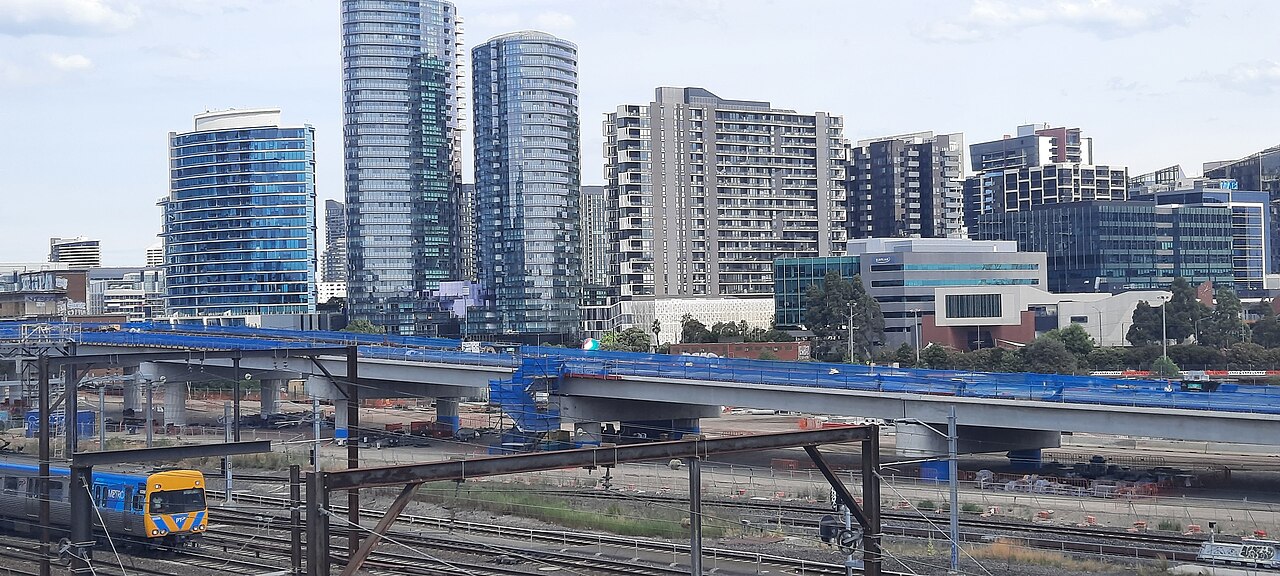
Transport is the suburb’s strongest retirement argument. Kensington and South Kensington stations, tram access on Racecourse Road, and short trips into North Melbourne, Flemington and the CBD make it practical to reduce driving. But if you expect a quiet village feel with a big supermarket, abundant parking and no through-traffic, Kensington will feel more demanding than the brochure version.
Signature Craving
The retirement test I like for Kensington is not a white-tablecloth dinner. It is whether you can build a normal Tuesday without turning it into a project. Start with Fifty-Six Threads on Derby Street: coffee, a familiar local scale, and a street that tells you more about daily Kensington than any agent description will. Fruits of Passion on Bellair Street plays a similar role for people closer to the station side, while Local Folk on Epsom Road is handy if you are testing the eastern edge. For dinner, Racecourse Road gives you The Abyssinian and Crisp Pizza, but that same convenience comes with tram movement, traffic and harder parking. Kensington’s food appeal is practical rather than performative: enough reliable places to anchor the week, not enough to hide the suburb’s rougher road noise and apartment-density trade-offs.
Comparisons Table
| Suburb | Transport | Tier | Region |
|---|---|---|---|
| Kensington | N/A | Inner | inner-cbd |
| Carlton | A+ | Inner | inner-cbd |
| Carlton North | C+ | Inner | inner-cbd |
| Docklands | B | Inner | inner-cbd |
Trust Block
Author: Priya Sharma — Family-and-community correspondent; reads council planning notices for fun.
Data: data/melbourne_suburbs_master.json (Codex per-LGA enumeration, cross-checked vs VEC + Australia Post + ABS SA2 boundaries), data/suburb_scores.json (composite percentile grades), data/venues/.json (OpenStreetMap + Gemini-verified venue catalog).
Last reviewed: 2026-05-26. Not financial advice. We do not accept paid placements in editorial.
FAQ
Q: Is Kensington a good suburb for retirees in 2026? A: Yes, but mainly for active and independent retirees who want inner-city access and can tolerate some urban friction. Kensington is strong on transport, cafe access and proximity to hospitals, specialists and family across inner Melbourne. It is weaker on quietness, easy parking and large-format shopping. The best fit is someone who can walk comfortably, use trains or trams, and likes a compact suburb with practical daily options. If you need a very calm street, step-free housing and simple car access, inspect carefully before committing.
Q: Which part of Kensington should retirees inspect first? A: Start around Bellair Street, Derby Street and the residential streets within a comfortable walk of Kensington station. That pocket gives you a useful mix of train access, cafes, smaller streets and less exposure to the heaviest traffic. It is still inner Melbourne, so do not expect silence, but it generally feels more manageable than living right on Racecourse Road or Epsom Road. Inspect the same address at different times of day, especially school pickup, evening peak and after dark, because Kensington can change noticeably by hour.
Q: Is Racecourse Road too noisy for retirees? A: Racecourse Road is convenient, but it is not the quietest retirement choice. The tram corridor, traffic, hospitality venues and delivery movement all add background noise. Some retirees will like the access to food, trams and nearby services; others will find the road tiring. If you are considering an apartment or townhouse close to Racecourse Road, check glazing, bedroom position, balcony orientation and whether the main bedroom faces the road. A rear-facing apartment can feel very different from one looking directly over traffic.
Q: Can retirees live in Kensington without a car? A: Many can, provided they choose the right address. Kensington and South Kensington stations, Racecourse Road trams and short rides into the CBD make car-light living realistic. The issue is not the headline transport map; it is the last 300 metres. Check the walk from the property to the station, tram stop, pharmacy, GP and supermarket options. If the route involves awkward crossings, poor lighting or gradients that bother your knees, the theoretical convenience will not matter much in daily life.
Q: What are the main downsides for older residents? A: The biggest downsides are noise, parking, access and rental pressure. Kensington has major roads, rail infrastructure and denser apartment pockets, so quiet living depends heavily on the exact street and building. Visitor parking can be difficult, which matters if family or carers come often. Some older housing has steps, narrow entries or poor insulation, while some newer apartments have lifts but higher rents and body corporate complexity. It is a suburb where the property inspection matters more than the suburb name.
Q: Is Kensington affordable for pensioners? A: For a single pensioner renting privately, Kensington is difficult unless there is extra income, savings or rent assistance that comfortably covers the gap. A one-bedroom unit around $460 per week is not unusual, and newer or better-located apartments can cost more. Couples with two income streams may have more room, but they still need to budget for utilities, transport, medical costs and rent increases. Kensington is not the worst inner-suburb rental market, but it is not a low-cost retirement suburb.
Q: Are Kensington apartments suitable for downsizers? A: Some are, but downsizers should be fussy. Look for step-free entry, reliable lift access, secure parking, good natural light, proper storage and bedrooms that are not facing the loudest road. Do not get distracted by a newer kitchen if the building has awkward garbage access, poor visitor parking or a long walk from the car space to the lift. Older walk-up apartments can be cheaper and larger, but stairs become a real issue if you plan to stay for the long term.
Q: How does Kensington compare with Flemington or North Melbourne for retirees? A: Kensington is usually more residential and compact than North Melbourne, while still giving quick access to the CBD. Compared with Flemington, it can feel a little more apartment-led in some pockets and less anchored by a single obvious shopping strip. Flemington may offer stronger market and food-strip energy around Racecourse Road, while North Melbourne gives broader services and hospital proximity at a higher price point. Kensington sits in the middle: practical, connected and useful, but highly dependent on micro-location.
Q: What should retirees check at an open inspection in Kensington? A: Check the route before you check the benchtops. Walk from the property to the nearest station, tram stop, cafe, pharmacy and main road crossing. Listen for train noise, tram bells, traffic and neighbours with windows open. In apartments, test lift access, intercoms, corridor lighting, bin rooms and car-space usability. Ask about recent rent increases, building works, cladding history if relevant, and owners corporation issues. Kensington can be an excellent downsizer suburb, but only when the building solves daily-life problems rather than creating them.