Verdict Box
Best for / People who want a quiet inner-east base with a few reliable High Street brunch options, not a full weekend food crawl. Skip if / You want Richmond-level choice, late trading, train access, or cafe density within a five-minute walk. Rent pressure / Annoying rather than chaotic: houses are expensive, units are limited, and one-bedroom stock is so thin that published medians can disappear. Commute reality / Trams and buses do the work. There is no station, and the Eastern Freeway helps drivers until it does not. Food scene / Better than outsiders assume, but small. Bean Thief, Kuche and Gilbert’s carry the brunch load, while Ali Qapu and Vicky’s widen the dinner map. Family fit / Strong for school-belt households who value parks and low-drama streets. Overall score / 7.2/10 if you already like Boroondara. 5.8/10 if brunch variety is the main reason you are moving.
At-a-Glance Table
| Factor | Kew East 2026 |
|---|---|
| LGA | Boroondara City Council |
| Postcode | 3102 |
| Geographic tier | East |
| Region | middle-east |
| Transport grade | C |
| Overall grade | C |
Who It Suits
Marcus, 42, Saturday-list person — wants one good coffee, one egg option, and no queue theatre. The Inner-east downsizer — likes Kew access but prefers quieter streets east of the main Kew drag. The family with one cafe ritual — values parks, schools and parking more than a rotating brunch hit list.
Rent & Property Reality
Median 1BR rent: $550 per week as the current visible asking-rent proxy, with YoY change not published for Kew East one-bedroom units because the sample is too thin; Domain’s Kew East rental table shows 1-bed units as unavailable while listing a lone Kew East 1-bed apartment at $550 per week, and REA’s broader Kew East unit data shows unit rents around $600 per week with about 3% annual growth. The cleanest public source is Domain’s 1-bedroom Kew East rental listings, backed by realestate.com.au Kew East rental market insights.
That caveat matters. Kew East is not an apartment-heavy suburb where a one-bedroom median tells a neat story. It is mostly family houses, villa units, townhouses and older low-rise stock, with the occasional apartment around Burke Road, High Street or the edges near Kew, Balwyn and Alphington. If you are a single renter using a one-bedroom budget, the headline number is less useful than the supply problem: some weeks there may be only one true Kew East option, and the rest of the search results will spill into Kew, Fairfield, Ivanhoe, Balwyn or Alphington.
In plain language, $550 per week buys you access to the postcode, not bargaining power. You may get a compact apartment, older unit, or a place marketed as Kew East but practically tied to a busy road. A couple chasing a two-bedroom unit will usually have a more rational search because that segment has more turnover and clearer pricing. A family looking for a house is in a different market entirely; three and four-bedroom houses push into premium Boroondara territory, with school proximity and off-street parking doing a lot of the price lifting.
The property cynic’s read: Kew East is not cheap, but it is not priced like a status suburb for brunch reasons. You pay for land, schools, quiet streets, freeway access and proximity to Kew/Balwyn amenities. The brunch strip is a bonus. If your budget is tight, do not fall in love with the suburb name before you inspect the actual street, tram walk and car noise.
Local Reality & Pockets
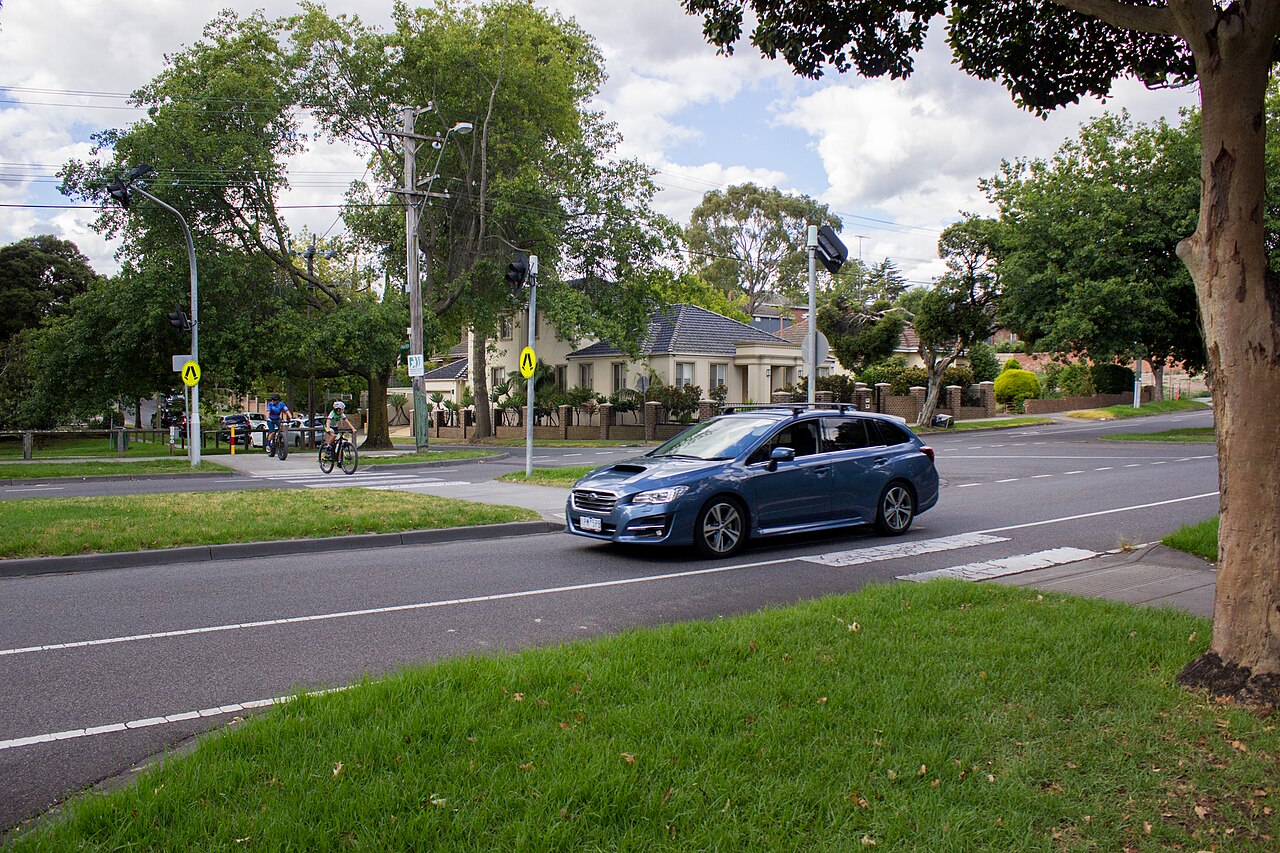
Favour the streets that let you use High Street without living directly on top of it. The cafe spine around 682 to 773 High Street gives you Kuche, Gilbert’s and Bean Thief, but High Street itself carries trams, through-traffic, delivery vans and the usual short-stay parking pressure. Living one or two blocks back can be the difference between useful walkability and constant vehicle noise. Streets around Strathalbyn Street, Belford Road, Windella Avenue, Kitchener Street and the quieter residential grids can feel much calmer, though the exact feel changes quickly near larger roads.
Avoid assuming every Kew East address is equally convenient. The suburb stretches awkwardly across tram corridors, bus routes, the Eastern Freeway edge and the Burke Road/High Street traffic pattern. If you rely on public transport, inspect the walk to the tram stop in bad weather, not just on a sunny Saturday. The lack of a train station is the big structural compromise. Buses help, trams help, but they do not replace the simplicity of being near Camberwell, Hawthorn or Fairfield station if your week depends on rail.
Parking is a real local test. Around High Street brunch hours, short-stay spots turn over, side streets absorb overflow, and some drivers treat cafe parking like a competitive sport. If you rent or buy without off-street parking, check permit rules and actual evening availability. A quiet street at 11am can look very different after work.
Two honest gotchas. First, the Eastern Freeway is both a selling point and a noise source. Being close to it can make cross-town driving easier, but some pockets pick up road hum, especially when the wind is wrong. Second, the food scene is useful but narrow. If your idea of a good suburb is choosing between ten serious brunch venues every weekend, Kew East will feel small fast. The better move is to use Kew East as the calm base and treat Kew, Balwyn, Hawthorn and Fairfield as part of your wider eating map.
Signature Craving
The Kew East brunch order is not a pilgrimage; it is a practical Saturday. Start with coffee and something pastry-adjacent at Kuche on High Street if you want the suburb at its most convincing: local, unfussy, and better suited to regulars than content hunters. Bean Thief is the other easy answer for the morning coffee loop, while Gilbert’s rounds out the High Street cafe run. The trick is not pretending Kew East has endless brunch range. It has a small set of dependable places, and that is the appeal if you hate queue culture. The signature craving is High Street Coffee And Eggs before the parking gets irritating, followed by a quick shop or a walk back into the quieter streets. If you want Persian for later, Ali Qapu changes the suburb’s food story more than another smashed avo plate ever could.
Comparisons Table
| Suburb | Transport | Tier | Region |
|---|---|---|---|
| Kew East | C | East | middle-east |
| Ashburton | B | East | middle-east |
| Balwyn | D | East | middle-east |
| Balwyn North | C+ | East | middle-east |
Trust Block
Author: Marcus Cole — Long-time Melbourne local who eats his way through the inner-east. Property cynic.
Data: data/melbourne_suburbs_master.json (Codex per-LGA enumeration, cross-checked vs VEC + Australia Post + ABS SA2 boundaries), data/suburb_scores.json (composite percentile grades), data/venues/.json (OpenStreetMap + Gemini-verified venue catalog).
Last reviewed: 2026-05-26. Not financial advice. We do not accept paid placements in editorial.
FAQ
Q: Is Kew East actually good for brunch in 2026? A: Yes, but only if you judge it as a compact local brunch suburb rather than a destination strip. High Street does most of the work, with Bean Thief, Kuche and Gilbert’s giving residents enough choice for coffee, eggs, pastries and a casual weekend breakfast. The honest limitation is volume. You are not getting the density of Richmond, Fitzroy, Hawthorn or Camberwell. Kew East works best for people who want a reliable local rather than a new venue every Saturday.
Q: Where is the main brunch pocket in Kew East? A: High Street is the practical answer. The known local venues sit along or close to that corridor, including Kuche at 682 High Street, Gilbert’s at 713 High Street and Bean Thief at 773 High Street. That stretch gives you the clearest cafe rhythm and the easiest pre- or post-brunch errands. The trade-off is traffic and parking pressure. If you live just off High Street, you get the convenience without taking the full hit from trams, road noise and weekend turnover.
Q: Is parking painful around Kew East cafes? A: It can be, especially around High Street during late morning brunch hours. Kew East is not impossible for drivers, but the best spaces near the cafes turn over quickly and side-street parking can become the overflow zone. If you are meeting people, arriving before the peak is noticeably easier than circling at 10:45am. For residents, off-street parking is more valuable than the suburb brochures admit, particularly if you live near High Street, Burke Road or other busy connecting roads.
Q: Is Kew East better for families or singles? A: Kew East leans family, and the housing stock tells you that before any agent does. The suburb has a lot of houses, townhouses and larger units, with fewer one-bedroom apartments than inner-city renters might expect. Families like the quieter streets, parks, school access and driveability. Singles can live well here if they value calm and inner-east access, but they should be realistic: nightlife is limited, train access is weak, and one-bedroom rental options can be scarce or oddly priced.
Q: What is the biggest downside of living in Kew East? A: The biggest downside is transport if you are not a driver. Kew East has trams and buses, but no train station, and that changes daily life more than people expect. Commutes can be fine if your destination lines up with tram routes or the Eastern Freeway, but awkward if you need rail-heavy trips across Melbourne. The second downside is food variety. The local cafe set is useful, but anyone chasing a deep brunch scene will keep drifting into Kew, Hawthorn, Camberwell or Fairfield.
Q: Which streets or pockets should renters inspect carefully? A: Inspect anything directly on High Street, Burke Road, Kilby Road or close to the Eastern Freeway with your ears open. These locations can be convenient, but traffic noise, tram movement, turning vehicles and parking churn are real variables. Quieter residential pockets off the main roads can feel far more relaxed. The smarter inspection is at the time you will actually be home: early morning for traffic, evening for parking, and Saturday late morning if cafe activity matters to your routine.
Q: Is Kew East expensive for renters? A: It is expensive in the way Boroondara suburbs often are: not always flashy, but stubbornly costly because land, schools and location carry the price. One-bedroom data is thin, so renters should not rely on a neat suburb median. Current visible one-bedroom asking rent sits around the mid-$500s per week, while broader unit medians are closer to the high-$500s or $600 mark depending on source and sample. Houses are a separate premium market, especially three and four-bedroom family homes.
Q: Can you live in Kew East without a car? A: You can, but you need the right address and habits. Living near High Street helps because cafes, small shops and tram access are close. The problem is cross-suburb movement. Without a train station, simple trips can become tram-plus-walk or bus-plus-wait exercises. A car-free renter should map work, groceries, gym, friends and weekend plans before signing. Kew East is manageable without a car for disciplined locals; it is not forgiving for people who expect rail-style convenience.
Q: What should brunch-focused newcomers know before moving there? A: Do not move to Kew East for a massive brunch circuit. Move there because you want a quieter inner-east suburb with enough good coffee to support normal life. Bean Thief, Kuche and Gilbert’s give you the core cafe set, and nearby suburbs fill the gaps when you want more choice. The best version of Kew East is routine-based: walk to High Street, know your order, avoid peak parking frustration, and use the suburb as a calm base rather than a food destination.