
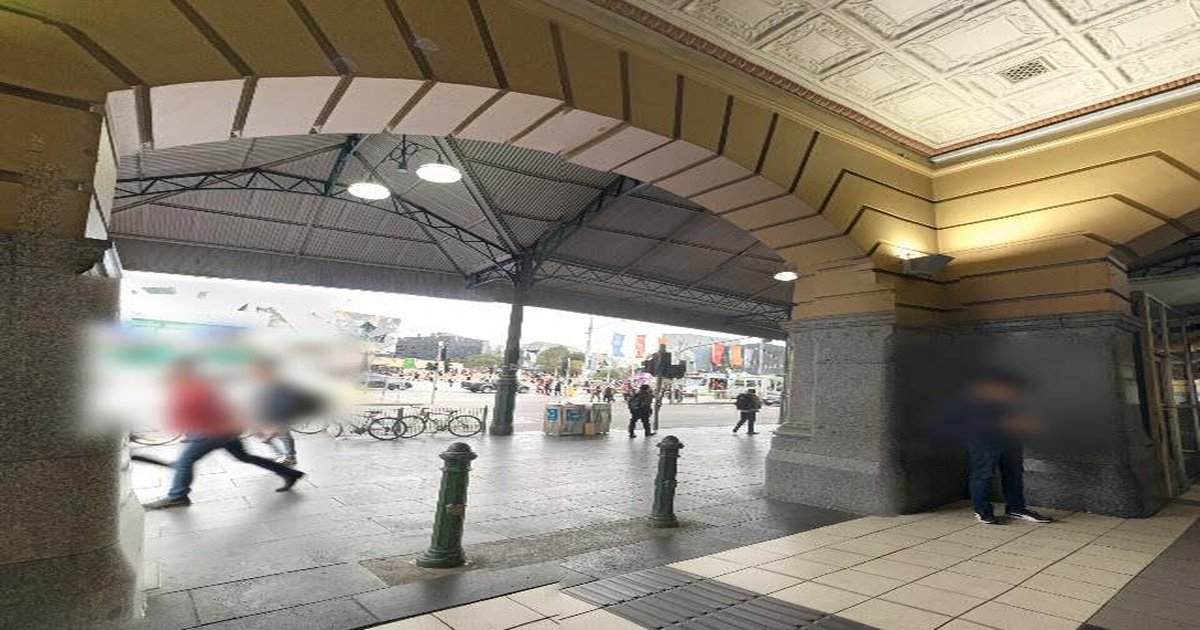
Melbourne CBD is the centre of the public transport network. Five train stations, the Free Tram Zone, and cycling infrastructure that has improved significantly in recent years make it one of the few Melbourne postcodes where a car is genuinely optional.
Train Stations
Flinders Street Station — The main junction and Melbourne’s most recognisable building. Services the Belgrave, Lilydale, Glen Waverley, Alamein, Sandringham, Craigieburn, Upfield, and Werribee/Williamstown lines. Handles roughly 90,000 passenger movements per day on weekdays. “Meet me under the clocks” remains Melbourne’s universal meeting instruction.
Southern Cross Station — The western terminal on Spencer Street. Services the Werribee, Williamstown, Craigieburn, Sunbury lines plus V/Line regional services to Geelong, Ballarat, Bendigo, and Traralgon. SkyBus to Melbourne Airport departs from here. The architecturally dramatic roof by Grimshaw Architects connects to the coach terminal and has decent bike parking.
Melbourne Central — Underground station beneath Melbourne Central shopping centre on La Trobe Street. Services the Craigieburn, Sunbury, Upfield, Hurstbridge, and Mernda lines. Direct escalator access to the shopping centre and State Library.
Parliament — Eastern CBD station at the top of Bourke Street near Spring Street. Services the Hurstbridge, Mernda, Glen Waverley, Belgrave, Lilydale, Alamein, and Pakenham/Cranbourne lines. Closest station to Treasury Gardens and Parliament House.
Flagstaff — Northern CBD station near Queen Street. Services similar lines to Melbourne Central. Closest station to Flagstaff Gardens and the legal precinct.
The City Loop connects Melbourne Central, Parliament, and Flagstaff underground, with Flinders Street and Southern Cross as the entry and exit points.
The Free Tram Zone
Every tram within the CBD boundary is free. No Myki tap required. The zone covers the entire Hoddle Grid and extends into Docklands. Look for the green “Free Tram Zone” signage at zone boundaries.
Key tram routes through the CBD:
- Route 86 (Bourke Street) — Runs from Docklands through the CBD to Northcote and Bundoora. The 86 is notoriously unreliable but covers a useful corridor.
- Route 96 (Bourke Street / Swanston Street) — Down to St Kilda Beach. Melbourne’s most iconic tram route.
- Route 109 (Collins Street) — Runs to Port Melbourne and Box Hill. The Collins Street section between Russell and Spring is the CBD’s most scenic tram ride.
- Route 19 (Elizabeth Street) — Runs north up Sydney Road to Brunswick and Coburg.
- Route 11 (Collins Street / La Trobe Street) — Workhorse route through the CBD’s northern edge.
Myki note: You do not need to tap on inside the Free Tram Zone. However, if you are travelling beyond the zone boundary, tap on before you reach the boundary or you risk a $280 fine.
Cycling
Protected bike lanes run along Swanston Street, La Trobe Street, and Exhibition Street. The Capital City Trail loops the CBD perimeter and connects to the Yarra Trail heading northeast toward Fairfield and south toward the Botanic Gardens.
Bike-share stations dot the grid. The CBD is flat, which makes cycling practical year-round for anyone willing to ride in Melbourne’s weather.
Secure bike parking is available at Flinders Street Station (Degraves Street undercroft) and Southern Cross Station. Most CBD office buildings have basement bike cages for tenants.
Driving and Parking
Driving in the CBD is expensive, slow, and generally not worth it. Wilson and APCOA car parks charge $40 to $65 per day. Street parking is time-limited and heavily enforced by the City of Melbourne. Parking inspectors operate seven days a week.
Hook turns operate at several intersections along Swanston and Elizabeth Streets. If you do not know what a hook turn is, do not drive through the CBD until you do. Watch a video. Practice the concept. Then attempt it in low traffic.
Residential permit parking exists in some CBD-fringe streets but is limited. If your apartment does not include a car park, factor in $250 to $400 per month for a commercial car space.
Real Commute Times from Melbourne CBD
| Destination | Mode | Time |
|---|---|---|
| Richmond | Train from Flinders Street | 5 min |
| South Yarra | Train from Flinders Street | 8 min |
| Carlton (Lygon St) | Walk or tram | 10-15 min |
| Fitzroy (Brunswick St) | Tram 86 from Bourke St | 12-15 min |
| St Kilda (Acland St) | Tram 96 from Swanston St | 25-30 min |
| Footscray | Train from Southern Cross | 10 min |
| Melbourne Airport | SkyBus from Southern Cross | 30-45 min |
| Geelong | V/Line from Southern Cross | 55-70 min |
FAQ
Is the Free Tram Zone really free? Yes. Any tram travel entirely within the marked zone boundaries costs nothing. You do not need to tap your Myki.
Which train station should I use? Flinders Street for southeastern and eastern lines. Southern Cross for western, northern, and regional services. Melbourne Central for the northern suburbs. Parliament for the Hurstbridge and Mernda lines.
Can I live in the CBD without a car? Yes. The CBD is one of the few Melbourne postcodes where car-free living is genuinely practical. Supermarkets, medical services, entertainment, and transport are all walkable.
The Verdict
Melbourne CBD transport earns an A-plus rating because the multi-modal options are genuinely excellent. Five train stations, a free tram network, protected cycling lanes, and walkable distances to everything you need. The only reason to own a car is weekend trips outside Melbourne, and even then V/Line covers Geelong, Ballarat, and Bendigo from Southern Cross.
More on Melbourne CBD: Cost of Living | The Complete Suburb Guide | For Young Professionals
Explore More of Melbourne CBD
- Melbourne CBD History
- Melbourne CBD Cocktails
- Melbourne CBD Melbourne Cbd For Retirees
- Melbourne CBD Cheap Eats
- Melbourne CBD Cheap Eats V2
- Melbourne CBD Rent Guide
- Melbourne CBD Best Restaurants V2
- Melbourne CBD Weekend Guide V2
💬 Discussion
Join the conversation — no account needed