Verdict Box
Rowville is not a suburb you pick for laneway bars, tram convenience or walk-everywhere living. It is a suburb you pick because you want a full-sized house, a driveway, schools nearby, enough shops for the weekly routine and quick access to open space on the eastern edge of the city.
The honest 2026 verdict: Rowville works best for households that already accept the car as the main tool of daily life. Stud Road, Wellington Road, Ferntree Gully Road and EastLink shape the suburb more than any cafe strip does. If your job, school runs, sport and family network sit across Knox, Monash, Dandenong or the outer east, Rowville can feel logical. If your week depends on easy rail into the CBD, it can feel punishing.
Historically, Rowville shifted from rural edge to major residential suburb through late twentieth-century growth. The name traces back to the Row family and the Stamford Park estate, with Knox Council noting Stamford Park Homestead as one of its historic homesteads. Today the heritage thread is still visible around Stamford Park, but the everyday Rowville story is more about post-1980s estates, shopping centres, school traffic, sport grounds and the long-running frustration that a suburb this large still has no railway station.
At-a-Glance Table
| Category | Rowville reality in 2026 |
|---|---|
| Local government | City of Knox |
| Population base | 33,571 people at the 2021 ABS Census |
| Median age | 41 at the 2021 ABS Census |
| Main shopping anchors | Stud Park Shopping Centre, Wellington Village, Rowville Lakes |
| Transport pattern | Bus links plus heavy car reliance; no train station |
| Best fit | Families, multi-car households, outer-east workers, buyers wanting space |
| Watch-outs | Commutes, road congestion, limited nightlife, price gap between houses and units |
| Local identity | Practical, spacious, sports-heavy, park-adjacent and road-defined |
Who It Suits
Priya, 42, family upgrader - wants a four-bedroom house, two living zones, a garage and school access without paying inner-east prices.
The Weekend Park User - wants Lysterfield, Churchill National Park and local reserves close enough for regular walks, rides or sport.
Sam, 31, hybrid worker - can work from home several days a week and only needs to face the commute on selected office days.
The Errand Optimiser - values supermarkets, Kmart, pharmacies, medical clinics, casual food and parking more than a main-street bar crawl.
Rent & Property Reality
Rowville’s property market is built around houses first. Realestate.com.au’s Rowville market profile for May 2025 to April 2026 lists a median house price of $1,160,000 and a median unit price of $772,000, with houses renting for $695 per week and units for $605 per week. That gap tells you a lot: the suburb is not a cheap outer-edge rental shortcut anymore, but it still offers more land and internal space than many suburbs closer to the city.
The rental story is equally practical. A three-bedroom house is often the core search for families, while four-bedroom homes draw tenants who want school-zone practicality, a second living area or a work-from-home room. The issue is not just price. It is supply. Family houses in established Knox suburbs can move quickly when they are clean, pet-suitable and close to the right school or bus route.
For context, the ABS 2021 Rowville QuickStats recorded 12,074 private dwellings, an average of 2.9 people per household and 2.2 motor vehicles per dwelling. Those figures match the lived reality: Rowville is a household-scale suburb, not an apartment district. The average car count matters because it affects driveway demand, street parking, morning exits and how realistic it is to live here without driving.
Buyers should also separate “Rowville” from “any house in Rowville”. A home near Stud Park has different daily convenience from a quieter pocket near the Lysterfield edge. A property near Wellington Village may suit Monash or Mulgrave workers better. A house on or near a main road can look like value until you live with the noise and turning movements. The suburb rewards buyers who map their actual weekly routine before they fall for floor area.
Local Reality & Pockets
Rowville’s centre of gravity is split. Stud Park is the civic and retail workhorse, with supermarkets, Kmart, library access, buses and services clustered around Stud Road and Fulham Road. Dexus describes Stud Park Shopping Centre as being about 27 kilometres south-east of the CBD, anchored by Kmart, Coles and a free-standing Woolworths. It is useful, but it is not a romantic main street. It is a car-park-heavy centre designed for efficient errands.
Wellington Village has a different role. It sits on Wellington Road near Braeburn Parade and carries more of the everyday dining, cafe and local-service feel. It is still suburban and parking-led, but it gives the southern and eastern side of Rowville a convenient alternative to Stud Park. Rowville Lakes, smaller again, serves its surrounding estates and reinforces how decentralised the suburb feels.
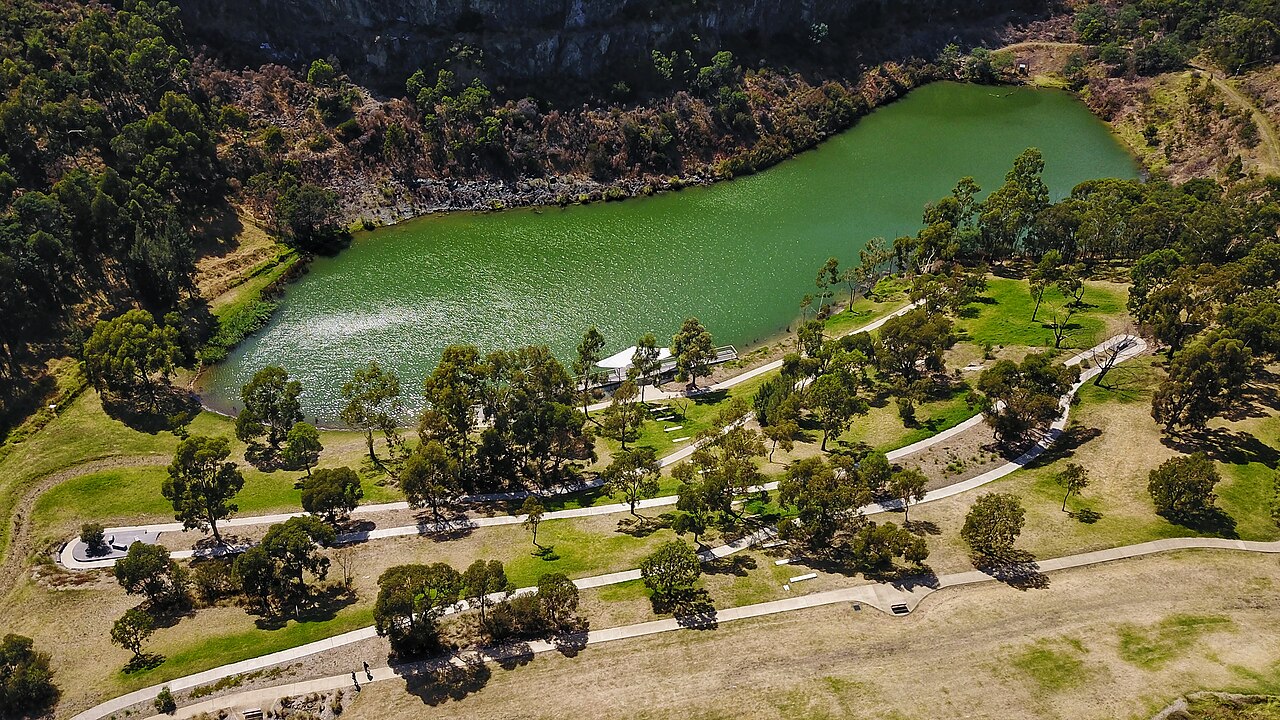
The eastern side near Lysterfield is one of Rowville’s strongest lifestyle cards. You get easier access to green space, bike rides, weekend walks and a quieter edge-of-suburb feeling. The trade-off is distance from some services and heavier dependence on the car. The western and central pockets are more practical for buses, Stud Park, schools and main-road access, but they can feel busier.
Transport is the recurring tension. Route 900 links Stud Park with Caulfield via Monash University and Chadstone, while other bus routes connect through Knox, Dandenong, Ringwood and surrounding suburbs. That helps, but it does not erase the absence of rail. Knox Council’s Rowville Plan was adopted in 2015 and set a long-term vision for the Rowville Major Activity Centre, including transport, commercial areas and community facilities. Nearly a decade later, the suburb still lives with the same structural issue: it is big enough to need stronger public transport, but most households still plan around cars.
The local history is more interesting when it is tied to places, not vague nostalgia. Stamford Park Homestead is the key heritage marker. Knox Council identifies it as one of three historic homesteads it owns, and the Stamford Park material records the homestead as built in 1882 by the Row family. That origin story sits beside a very modern suburb of courts, brick houses, large shopping centres and sports clubs. Rowville’s change was not slow cafe-led reinvention. It was large-scale suburbanisation.
Signature Craving
Rowville’s signature craving is not a chef-hatted destination meal. It is the reliable suburban brunch or coffee stop that fits around errands, sport, school pickup or a weekend drive.
At Wellington Village, Choco Bean Cafe is the kind of venue that makes sense for Rowville: easy to reach, casual, family-friendly and placed where people are already doing the practical things. Wellington Village’s store directory lists Choco Bean Cafe alongside other local food names such as The Butler’s Pantry, Eating House and Amalfi Pizza & Pasta, which is a better reflection of Rowville dining than pretending the suburb has an inner-city food strip.
The better way to judge eating in Rowville is by convenience and repeat use. Can you get breakfast before a Lysterfield walk? Can you meet another parent without driving to Glen Waverley? Can you pick up dinner after sport? On those terms, Rowville performs. If you want dense choice, late trading, wine bars or destination dining, you will usually look outside the suburb.
Comparisons Table
| Suburb | Compared with Rowville | Main advantage | Main drawback |
|---|---|---|---|
| Lysterfield | Quieter, greener and more semi-rural in feel | Stronger park-edge lifestyle | Fewer shops and more car dependence |
| Scoresby | Smaller and more industrial/commercial around key roads | Good access to employment zones | Less family-house depth and weaker village feel |
| Knoxfield | More compact and closer to Westfield Knox | Handy for Knox services and arterials | Less spacious, less park-edge identity |
| Wantirna South | Bigger retail pull through Westfield Knox | More shopping and services | Busier roads and often more competition for property |
Trust Block
Author: Oscar Tan
Method: This guide was rewritten from scratch for 2026 using current suburb profiles, official council material, ABS Census data, retail centre directories and property market sources. Claims about venues, shopping centres, transport and local history were checked against named sources rather than inferred from generic suburb copy.
Key sources checked: ABS Rowville QuickStats 2021, Realestate.com.au Rowville property profile, Knox City Council Stamford Park and Rowville Plan pages, Dexus Stud Park Shopping Centre profile, Wellington Village store directory, Transport Victoria route information and Parks Victoria material for nearby park access.
Local caveat: Rowville is large. A house near Stud Park, a court near Rowville Lakes and a property near the Lysterfield edge can feel like three different daily routines. Inspect the micro-location, not just the suburb name.
FAQ
Q: Is Rowville a good suburb in 2026?
A: Yes, if you want space, practical shops, schools, parks and a family-house setting. It is less suitable if you need rail access, strong nightlife or a walkable inner-suburb lifestyle.
Q: Does Rowville have a train station?
A: No. Rowville relies on buses and cars. The lack of rail is one of the suburb’s biggest long-term frustrations.
Q: What is Rowville best known for?
A: Large family homes, Stud Park Shopping Centre, Wellington Village, sports clubs, access to Lysterfield and Churchill National Park, and the long-running Rowville rail debate.
Q: Is Rowville expensive?
A: For an outer-eastern suburb, it is no longer cheap. Houses are typically priced around the family-upgrader market, while units and townhouses offer a lower entry point but less choice.
Q: Is Rowville good for renters?
A: It can be, especially for families wanting a house, but rents are not bargain-level and good homes can move quickly. Renters should check bus access, heating and cooling, parking and school-run practicality.
Q: Which part of Rowville is best?
A: It depends on your routine. Stud Park suits convenience, Wellington Village suits southern access and casual dining, while the Lysterfield side suits quieter park-edge living.
Q: Is Rowville walkable?
A: Only in pockets. You can walk locally around some estates and shopping nodes, but the suburb is spread out and major roads make many weekly tasks car-based.
Q: What is the main downside of Rowville?
A: Transport. The suburb has bus routes, but no train station, and many households need more than one car to make work, school and sport schedules function smoothly.
Q: Are there good cafes or restaurants in Rowville?
A: There are useful local options, especially around Wellington Village and Stud Park, but the scene is practical rather than destination-led. Choco Bean Cafe, The Butler’s Pantry, Eating House and Amalfi Pizza & Pasta are examples of the local pattern.
Q: Why does Rowville’s history matter to buyers?
A: The history explains the layout. Rowville moved from rural estates into planned suburban growth, so it has big residential pockets, shopping centres, wide roads and heritage markers like Stamford Park rather than a traditional village high street.