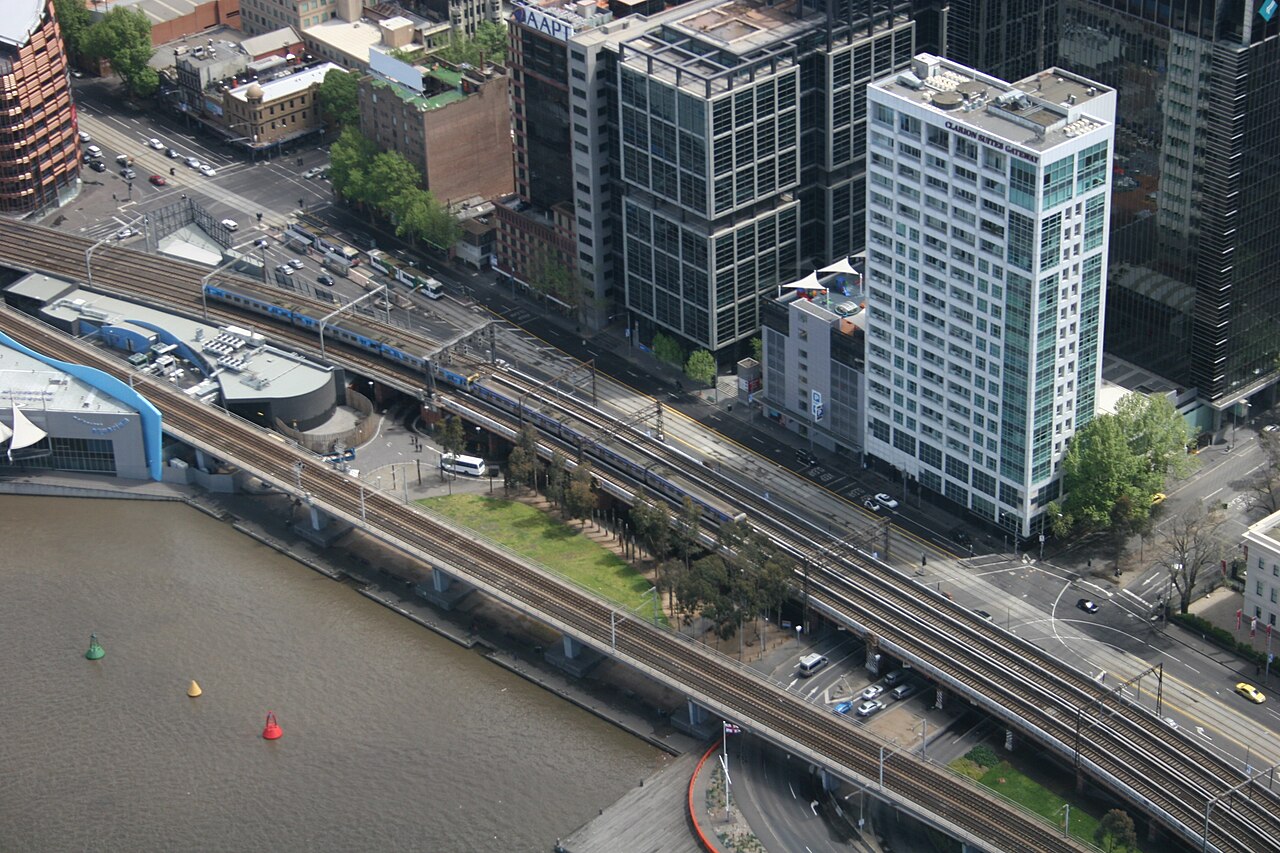
Verdict Box
Best for: renters who want inner-city access without living inside the CBD grid. Skip if: you need easy street parking, cheap rent, or silence after 10 pm. Rent pressure: a 1-bed unit median of $550/week is not fringe pricing; it is inner-south pricing with real competition for light, storage and parking. Commute reality: strong if you work in the CBD, Southbank, Albert Park, St Kilda Road or Port Melbourne; less elegant if your life points east-west across town. Food scene: practical and proven rather than performative, with Clarendon Street, Park Street, Cecil Street and Yarra Place doing most of the useful work. Family fit: good for renters who can afford space, but the suburb is not kind to families trying to stretch one income into a three-bed. Overall score: 7.5/10. Excellent location, expensive rent, and enough everyday friction that the wrong apartment can make the suburb feel overrated fast.
At-a-Glance Table
| Factor | South Melbourne 2026 |
|---|---|
| LGA | Port Phillip City Council |
| Postcode | 3205 |
| Geographic tier | Inner |
| Region | inner-south |
| Transport grade | B |
| Overall grade | B+ |
Who It Suits
Nadia, 34, city office renter — wants a short commute and will pay extra to avoid CBD apartment churn. The Car-Light Couple — can live off trams, walking and car-share instead of fighting for a permit space. Marcus, 41, food-led sceptic — likes proper old inner-Melbourne texture but checks window seals before falling for the postcode.
Rent & Property Reality
The clean 2026 anchor is this: South Melbourne’s 1-bedroom unit median rent is $550 per week, up 3.8% over the year, based on the May 2025 to April 2026 snapshot on realestate.com.au. That same profile puts the broader unit median at $650 per week, up 3.2%, with 1-bed rentals taking a median 18 days on market. In plain English, the suburb is expensive, but it is not pure fantasy pricing if you compare it with Southbank, the CBD edge, Albert Park and St Kilda Road.
The catch is that the $550 figure is a median, not a promise. A tired 1-bed with poor light, no car space and dated heating can sit near the lower end. A cleaner apartment around Park Street, Bank Street, Albert Road or the newer towers near the northern edge can push well above it, especially if it has secure parking, storage, a proper balcony or a layout that does not force your desk into the hallway. The listed rent often tells only half the story; body corporate rules, lift wait times, bin rooms, building ventilation and whether the bedroom has a real window matter more here than in looser suburban markets.
For renters, South Melbourne is priced as a convenience suburb. You are paying to be close to the CBD, Southbank, the market, tram corridors and the inner-south job belt. That works if you actually use those advantages. If you work from home five days a week, drive everywhere and only visit Clarendon Street once a fortnight, the premium starts to look silly. You could get more space in parts of Brunswick, Footscray, Kensington or Caulfield for a similar weekly number, depending on property type.
The inspection strategy is simple: do not get hypnotised by the postcode. Ask what the exact parking situation is, test mobile reception inside the apartment, check bedroom noise with windows shut, confirm heating and cooling are fixed appliances rather than portable afterthoughts, and look at the building at bin time if you can. At $550 a week for a 1-bed, small defects become expensive annoyances very quickly.
Local Reality & Pockets
South Melbourne is not one uniform rental market. The pocket you choose changes the daily experience. Clarendon Street gives you convenience, trams, supermarkets, food and a usable high street, but it also brings delivery trucks, late foot traffic, tram noise and apartments that can feel exposed if they sit directly over retail. If you want daily convenience and do not own a car, Clarendon Street can make sense. If you are noise-sensitive, move one or two streets off it and inspect at night, not just during a sunny Saturday open.
Park Street is a mixed call. Around 19 Park Street, where The Olive Tree Bistro sits, and further along near apartment buildings, you get good tram access and a straight run toward St Kilda Road and the city. But Park Street can carry more traffic than renters expect, and some apartments there trade on location while skimping on sound insulation. Tempura Hajime at 60 Park Street is a useful ground-truth marker: this is a real eating and movement strip, not a sleepy residential lane.
Cecil Street has another personality again. Near Centro Ristorante Italiano at 111 Cecil Street, you are close to the market side of the suburb, which is useful and occasionally maddening. Market-day movement, loading zones, shoppers circling for parking and weekend congestion can turn a short errand into a test of patience. That pocket suits renters who walk, tram or cycle. It is less friendly to people who expect easy kerbside parking after work.
For quieter living, look for residential streets set back from Clarendon, Cecil, Kings Way and major tram corridors. Some streets toward the Albert Park side feel calmer and more neighbourly, but the rent follows that calm. The closer you get to major roads such as Kings Way, the more you need to care about glazing, balcony orientation and whether the bedroom faces traffic.
Transport is strong by Melbourne standards. Trams put the CBD, St Kilda Road, Southbank and nearby inner suburbs within easy reach, and cycling can be realistic if your building has secure storage. Parking is the sore point. Permit rules, apartment car-stackers, visitor parking shortages and event spillover can all bite. Two honest gotchas: first, some apartments look premium online but live like short-stay stock, with thin walls and transient neighbours. Second, older terraces can be beautiful but cold, narrow, storage-poor and expensive to heat. South Melbourne rewards renters who inspect like cynics.
Signature Craving
The rent makes more sense when your week actually uses the suburb. A proper South Melbourne rhythm might be coffee at ST. Ali in Yarra Place, groceries near the market, a tram home, then dinner on Clarendon or Park Street without turning the evening into a cross-town project. That is the case for paying the premium. The danger is mistaking access for lifestyle. If your budget is stretched so tight that ST. Ali becomes a once-a-quarter treat and every noisy delivery truck outside your apartment feels personal, the suburb will wear you down. I would rather rent a smaller, quieter 1-bed two streets off the action than a shinier place directly above it. South Melbourne is best when food, transport and errands are close enough to become boringly useful. That is the win: less romance, more daily competence.
Comparisons Table
| Suburb | Transport | Tier | Region |
|---|---|---|---|
| South Melbourne | B | Inner | inner-south |
| Albert Park | C+ | Inner | inner-south |
| Balaclava | A | Inner | inner-south |
| Elwood | D+ | Inner | inner-south |
Trust Block
Author: Marcus Cole — Long-time Melbourne local who eats his way through the inner-east. Property cynic.
Data: data/melbourne_suburbs_master.json (Codex per-LGA enumeration, cross-checked vs VEC + Australia Post + ABS SA2 boundaries), data/suburb_scores.json (composite percentile grades), data/venues/.json (OpenStreetMap + Gemini-verified venue catalog).
Last reviewed: 2026-05-26. Not financial advice. We do not accept paid placements in editorial.
FAQ
Q: Is South Melbourne expensive for renters in 2026? A: Yes. The clearest 2026 benchmark is the 1-bedroom unit median of $550 per week, with realestate.com.au showing 3.8% annual growth for the May 2025 to April 2026 period. That puts South Melbourne firmly above many middle-ring suburbs, though still with better value than some prestige bayside or CBD-edge options once transport is counted. The suburb charges for proximity: CBD access, tram routes, Southbank, the market, Clarendon Street and the inner-south employment belt. It is not a bargain suburb, and renters should treat cheap listings with suspicion.
Q: What sort of renter gets the best value from South Melbourne? A: The best value goes to renters who use the location daily. If you work near the CBD, Southbank, St Kilda Road, Port Melbourne or Albert Park, the commute savings can justify the higher weekly rent. It also suits renters who can live with one car or no car, because parking is one of the suburb’s most consistent irritations. If your life is mostly home-based, car-based and space-hungry, South Melbourne can become an expensive postcode badge rather than a practical choice.
Q: Which streets or pockets should renters inspect first? A: Start one or two streets back from Clarendon Street if you want convenience without living directly over the busiest movement. Park Street can work well for tram access, but inspect for traffic noise and bedroom orientation. Cecil Street is useful near the market, though weekend and loading activity can test patience. Quieter residential streets toward the Albert Park side can feel calmer, but rents usually reflect that. The key is not the street name alone; it is whether the apartment faces traffic, has proper glazing, and gives you secure parking or storage if you need it.
Q: Is parking really that bad in South Melbourne? A: It can be, especially for renters who assume inner-suburban street parking works like a middle-ring suburb. Permit zones, apartment buildings with limited visitor spaces, car-stackers, market traffic, local workers and event spillover all compete for kerb space. A listing that says parking is available needs follow-up: is it on title, allocated, stacker-based, height-limited, shared or permit-only? If you drive every day, secure parking is worth real money here. If you do not have it, inspect after work and on weekends to see the actual parking pressure.
Q: Are apartments or terraces the better rental choice? A: Apartments are usually the more practical rental choice for singles and couples, especially if they have lift access, heating and cooling, secure entry, storage and a car space. Terraces offer character and street presence, but they can be narrow, cold, short on storage and expensive to run if insulation is poor. Families or share houses may prefer terraces for separation and outdoor space, but they should inspect carefully for damp, heating, bathroom ventilation and noise transfer. In South Melbourne, charm can cost as much as convenience and sometimes gives you less comfort.
Q: Is South Melbourne good without a car? A: Yes, and that is one of the stronger arguments for renting there. Trams, walkable errands, nearby food, access to Southbank and the CBD, and cycling options make car-light living realistic. The suburb works particularly well if your job and social life sit around the inner city or inner south. The trade-off is that public transport is tram-heavy, so cross-town trips can still be slow. If you regularly need to reach outer suburbs, industrial job sites or family across town, test those actual routes before signing.
Q: What should I check at an inspection? A: Check noise first: stand in the bedroom, shut the windows and listen for trams, trucks, nightlife, lift shafts and neighbours. Then check light, ventilation, heating, cooling, storage and whether the bedroom has a real window. Ask about parking in exact terms, not vague agent language. Look at the bin room, lobby, lifts and mail area because they reveal how the building is managed. For older places, look for damp, mould risk, weak water pressure and poor seals. South Melbourne rent is high enough that you should be fussy.
Q: Is South Melbourne family-friendly for renters? A: It can be, but the budget needs to be realistic. The suburb has parks, services, transport and access to nearby schools and activity corridors, which helps families who want inner-city convenience. The hard part is space. Three-bedroom houses or larger apartments can become very expensive, and many rental properties were not designed for storage-heavy family life. Families should prioritise floor plan over postcode polish: bedrooms that actually fit beds, a usable living area, safe entries, pram storage, parking and heating matter more than being closest to Clarendon Street.
Q: What is the biggest mistake renters make in South Melbourne? A: The biggest mistake is paying for the suburb without checking whether the specific property earns the rent. South Melbourne has excellent access, but a noisy, hot, storage-poor apartment above traffic can make $550 or $650 a week feel punishing. Renters also underestimate parking pressure and overestimate how often they will use every cafe, restaurant and market convenience. The right move is to inspect the micro-location: street noise, building management, transport path, parking rules and daily errands. The suburb is good, but it does not rescue a bad dwelling.