
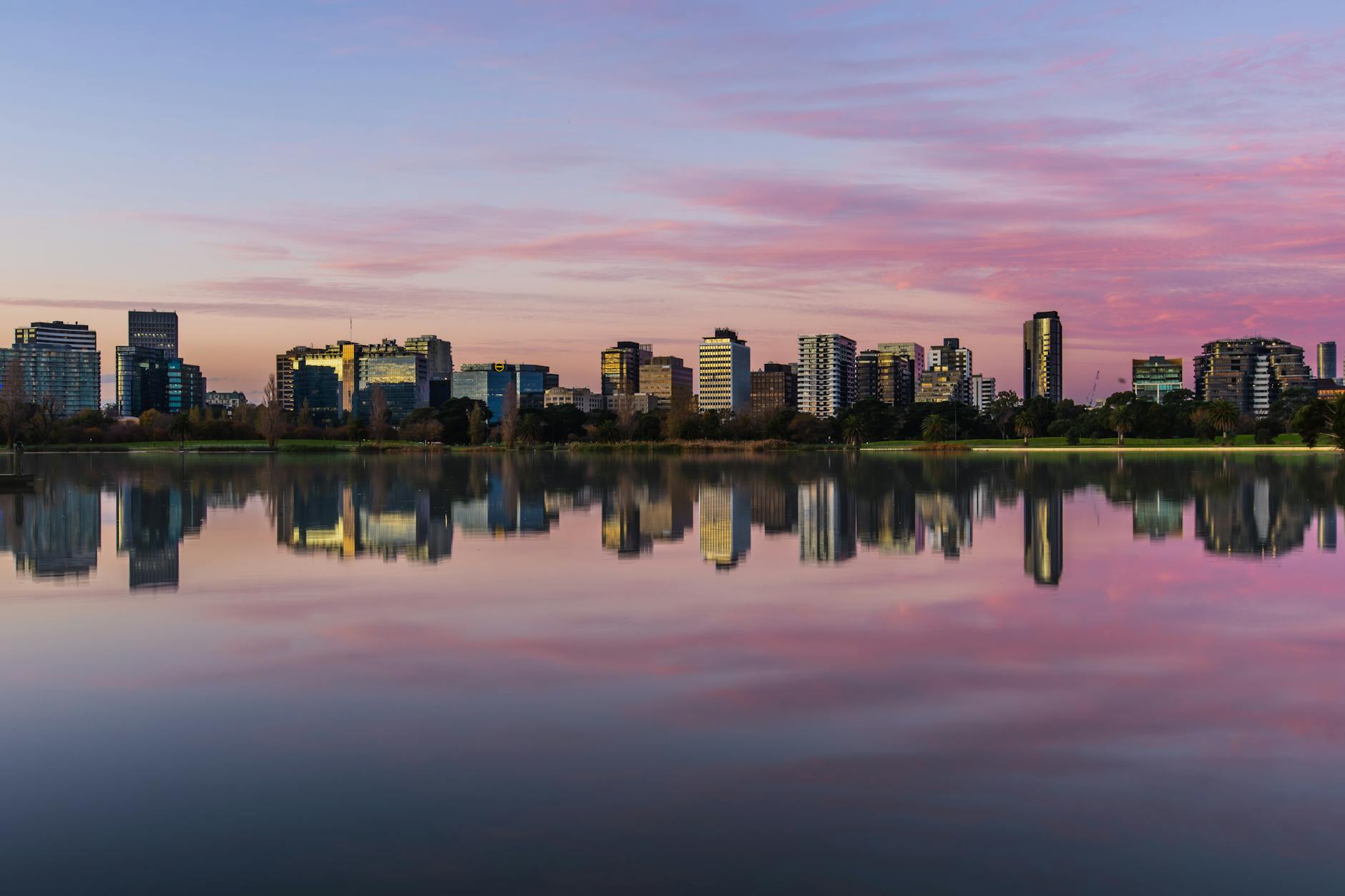
St Kilda has had more reinventions than Madonna, and understanding those reinventions explains why the suburb feels the way it does today. From genteel seaside resort to bohemian playground to red-light precinct to gentrified bayside hub, every era left its mark on the streets, the buildings and the attitude. This is not a suburb that forgets its past. It wears it.
The Beginning: 1840s to 1880s
The land that became St Kilda was Boon Wurrung country for thousands of years before European settlement. The Yalukit Willam clan of the Boon Wurrung people used the coastal area for fishing, camping and ceremony. The bay, the pier site and the foreshore were gathering places long before anyone built a hotel.
European settlement began in the 1840s when the area was surveyed and sold as allotments. The name St Kilda comes from a schooner called the Lady of St Kilda that was moored offshore in 1841, which itself took its name from the remote Scottish archipelago.
By the 1850s, St Kilda was establishing itself as a seaside retreat for Melbourne’s wealthy. The gold rush brought money flooding into Melbourne, and the well-off wanted somewhere to escape the heat and dust of the CBD. Grand hotels went up along The Esplanade. The Esplanade Hotel opened in 1857 and still stands today. Ornate Victorian mansions lined the streets behind the foreshore. The botanical gardens were established in 1859. St Kilda was Melbourne’s weekend getaway before the concept of a weekend was formalised.
The street grid laid out in this era, Fitzroy Street running downhill to the bay, Acland Street parallel one block east, Carlisle Street cutting across, remains the structure of the suburb today.
The Golden Era: 1890s to 1940s
The arrival of the St Kilda to Melbourne railway in 1857 and the cable tram network in the 1880s connected St Kilda to the CBD permanently. The suburb shifted from weekend retreat to full-time residential community. The population grew, shops opened along Fitzroy Street and Acland Street, and the foreshore became Melbourne’s premier public beach.
Luna Park opened on 13 December 1912 on the site of the old St Kilda baths. The Scenic Railway, a wooden roller coaster, operated from opening day and still runs in 2026, making it one of the oldest continuously operating roller coasters in the world. The enormous Mr Moon face entrance became one of Melbourne’s most recognisable landmarks.
The Palais Theatre opened in 1927 as a picture palace on The Esplanade. The art deco interior seated over 3,000 people and became one of the largest theatres in the Southern Hemisphere. It hosted everything from silent films to big band dances to rock concerts.
Jewish migration from Eastern Europe brought a new community to St Kilda and the surrounding suburbs through the early 20th century. Acland Street’s cake shops and bakeries trace directly to this community. Monarch Cakes, still operating at 103 Acland Street, opened in 1934. The European patisserie tradition that defines the strip today is a direct inheritance from families who brought their recipes from Poland, Hungary, Russia and Lithuania.
The Post-War Shift: 1950s to 1970s
After World War II, St Kilda’s character began to change. The grand Victorian mansions were subdivided into flats. Housing commission towers went up. The suburb’s population shifted from wealthy to mixed, and then to increasingly diverse. New waves of migration brought Greek, Italian and Eastern European communities, adding new food traditions to the already established Jewish bakeries.
The 1960s and 70s brought a darker chapter. As wealthier residents moved to suburbs further out, St Kilda became known for its red-light district along Fitzroy Street and Grey Street. Sex work, drug trade and street crime gave the suburb a reputation that stuck for decades. The cheap rents that followed attracted artists, musicians, writers and the kinds of people who thrive in places that polite society has abandoned.
This was the era that produced St Kilda’s bohemian identity. The bars, the live music, the counter-culture energy that still defines the suburb’s attitude all trace to this period. The Espy became a legendary venue in the live music scene, hosting acts from Nick Cave and the Bad Seeds to Paul Kelly to Crowded House in its various rooms. If you wanted to play Melbourne, you played The Espy.
The Reinvention: 1980s to 2000s
By the 1980s, St Kilda was Melbourne’s most complex suburb: a place where sex workers, artists, European cake-shop owners, backpackers, drug users, musicians and old-money residents somehow coexisted on the same streets. The beach drew tourists. Fitzroy Street drew everyone else.
The 1990s and 2000s brought the first wave of gentrification. Cafes replaced milk bars. Restaurants moved into former boarding houses. Property developers saw the bay views and the tram connections and started building. Rents climbed. Some of the rougher elements were pushed out or policed away. The Sunday market on The Esplanade became a major weekly event.
The LGBTQ+ community had been part of St Kilda’s fabric since at least the 1970s, and the suburb’s acceptance of difference became one of its defining features. St Kilda was never as explicitly queer-identified as Fitzroy or Collingwood, but it carried an openness that made it home for people who did not fit neatly elsewhere.
The Esplanade Hotel nearly closed in the 2000s, saved by community campaigning and eventually sold to the Sand Hill Road group, who renovated it while preserving the live music program. The Espy’s survival is one of St Kilda’s most important stories: a community that decided its cultural heritage was worth fighting for.
St Kilda Today
In 2026, St Kilda is in a decent era. The suburb has absorbed its gentrification without losing all its edges. Fitzroy Street still has moments of chaos on weekend nights. The housing commission blocks are still there alongside the new apartment developments. Acland Street’s cake shops are declining but the tradition persists. The Espy is thriving. Luna Park is still grinning.
The City of Port Phillip, which governs St Kilda along with its neighbouring suburbs, manages the balance between development and preservation. New apartment towers add density. Infrastructure investment improves public spaces. The foreshore and pier have been upgraded.
The backpacker hostels that once defined Carlisle Street have thinned but not disappeared. The LGBTQ+ community remains visible. The live music scene continues, anchored by The Espy and the Palais Theatre.
St Kilda’s population today is roughly 20,000 in the suburb proper, young, professional-skewing, with a significant rental population. The median age sits lower than Melbourne’s average. The suburb attracts people in their 20s and 30s who want beach access without suburban quiet.
What Was Lost
Every suburb transformation has costs. The affordable boarding houses that sheltered people with nowhere else to go. The independent shops that could not survive rent increases. The live music venues that closed when developers saw the land value. The communities that were priced out street by street.
Long-term residents carry genuine grief about what was demolished, what closed, and who could not stay. These are not abstract losses. They are specific buildings, specific businesses, specific people. Acknowledging this honestly is part of understanding what St Kilda is today.
Frequently Asked Questions
When was Luna Park built?
Luna Park opened on 13 December 1912. The Scenic Railway wooden roller coaster has operated from opening day and is one of the oldest continuously operating roller coasters in the world.
Why are there cake shops on Acland Street?
Jewish migration from Eastern Europe in the early 20th century brought families who established bakeries and patisseries along Acland Street. Monarch Cakes, opened in 1934, is the most famous survivor of this tradition. The recipes trace directly to Poland, Hungary and Lithuania.
Was St Kilda dangerous?
St Kilda had a genuine red-light district and drug scene from the 1960s through the 1990s, centred on Fitzroy Street and Grey Street. The suburb has changed significantly since then, but the edges and complexity from that era are part of why St Kilda has the character it does today.
The Verdict
St Kilda’s history is Melbourne’s history compressed into a few streets. Boon Wurrung country became a seaside resort, became a bohemian precinct, became a red-light district, became a gentrified bayside suburb, and somehow kept pieces of every era along the way. The cake shops remember the Jewish families. The Espy remembers the rock bands. The housing commission blocks remember the people who could not afford anywhere else. And Luna Park’s Mr Moon face has been watching it all since 1912, grinning through every reinvention.
For the current picture of the suburb, read our St Kilda honest guide. For what it costs to live here now, check the cost of living guide. And for the hidden corners most people miss, our hidden gems guide covers the back streets and quiet parks where the real St Kilda lives.
Explore More of St Kilda
- St Kilda Things To Do This Weekend
- St Kilda Cocktails
- St Kilda Cheap Eats
- St Kilda Rent Guide
- St Kilda Date Night Guide
- St Kilda New Openings
- St Kilda St Kilda For Retirees
- St Kilda Things To Do
💬 Discussion
Join the conversation — no account needed