
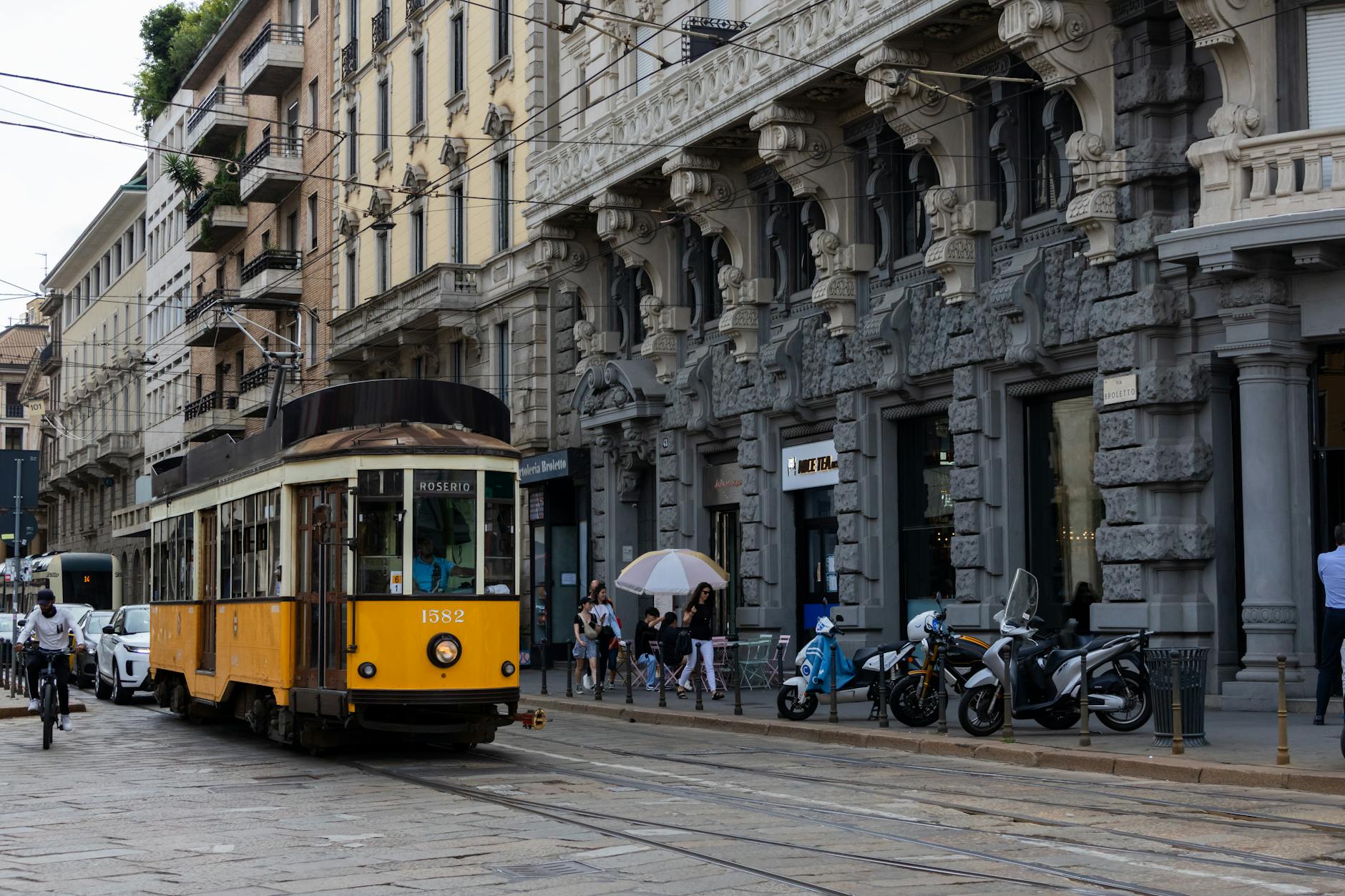
St Kilda Transport Guide 2026: Trams, Cycling and the Commute Reality
St Kilda’s transport setup is one of the strongest reasons to live here. No train station — that’s the first thing to get your head around — but the tram network, cycling infrastructure and walkability more than compensate. Here’s the real picture of getting around St Kilda in 2026.
The Key Fact: No Train Station
St Kilda does not have its own train station. The suburb had one until 1987, when the St Kilda railway line was converted to a light rail service and eventually became part of the tram network (route 96). If anyone tells you St Kilda has a train station, they’re wrong.
The nearest train station is Balaclava Station on the Sandringham line, about a 10–15 minute walk from the Carlisle Street end of St Kilda. It gets you to Flinders Street Station in under 20 minutes. The station is on the St Kilda/Balaclava border and is the best option if you need the train network for work or travel.
Trams: The Lifeline
Trams are how St Kilda connects to the rest of Melbourne. Three routes serve the suburb:
Route 96 (East Brunswick to St Kilda Beach) — This is the workhorse. It runs along Acland Street and through the dedicated light rail corridor through South Melbourne, which means it’s faster and more reliable than most tram routes. The 96 gets you to the CBD in about 25–30 minutes. Services run every 6–8 minutes during peak and every 10–12 minutes off-peak. The St Kilda Beach terminus is at the intersection of Acland Street and The Esplanade. The 96 is widely considered one of Melbourne’s best tram routes — partly for the speed, partly for the scenery as you pass through Albert Park.
Route 16 (Melbourne University to Kew via St Kilda) — Runs along Fitzroy Street through South Melbourne to the CBD. This is the tram to take if you live on the Fitzroy Street side of the suburb. It’s slower than the 96 because it runs in mixed traffic rather than a dedicated corridor, but it connects to South Melbourne Market and the arts precinct. Services every 10–12 minutes during the day.
Route 3/3a (Melbourne University to East Malvern via St Kilda) — Runs along Carlisle Street connecting St Kilda to Balaclava and the eastern suburbs. Useful for reaching Balaclava’s shops and the Sandringham train line at Balaclava Station.
Night Network: On Friday and Saturday nights, the 96 runs extended services past the regular timetable, with services continuing until approximately 1:30am and resuming early. Check the PTV Night Network timetable for exact times.
Cycling: Genuinely Excellent
St Kilda is one of the few Melbourne suburbs where cycling is the fastest way to get around on a weekend. The infrastructure supports it:
The Bay Trail runs along the foreshore and connects Port Melbourne through St Kilda to Elwood, Brighton and eventually Frankston. The St Kilda section is flat, wide, well-maintained and separated from vehicle traffic. It’s about 8km from St Kilda to the CBD via the Bay Trail — a 25–30 minute ride on a standard bike, less on an e-bike.
Fitzroy Street has dedicated bike lanes running downhill toward the bay. The uphill return is a genuine workout on a standard bike — this is where e-bikes earn their keep.
The Esplanade has separated cycling infrastructure along the foreshore. On weekends, the path is shared with joggers and walkers — ride at a considerate pace.
Bike parking is available at most commercial strips and near Luna Park. Secure bike cages exist at Balaclava Station for those combining cycling and train.
Bike hire: Rentabike near Luna Park offers day hire from about $25/day. E-bike hire runs about $50/day. Melbourne’s share bike scheme also has docking stations scattered through St Kilda.
CBD commute by bike: From St Kilda Beach to the CBD (Flinders Street) is about 7–8km via the Bay Trail and Southbank. On a road bike, that’s 20–25 minutes. On an e-bike, 15–20 minutes. It’s one of Melbourne’s most pleasant bike commutes — flat, scenic, and mostly separated from traffic.
Buses
Buses fill the gaps where trams don’t reach:
Route 606 (Elsternwick to Fishermans Bend) passes through St Kilda and connects to Elsternwick Station and the shopping strip. Useful if you need the Frankston line.
Route 246 (La Trobe University to Elsternwick via St Kilda) connects the suburb to the eastern side.
Route 600 runs a loop service connecting various parts of the City of Port Phillip.
Bus frequency is lower than trams — typically every 15–20 minutes during the day and less frequent in the evening. Trams are almost always the better option if your destination is on a tram route.
Driving and Parking
Let’s be direct: driving in St Kilda on a weekend is an exercise in frustration, and parking compounds it.
Street parking on Fitzroy Street and Acland Street is metered during the day ($4–$6/hour in most zones) and timed (usually 1–2 hours). After the meters switch off (typically 6:30pm or 8:30pm depending on the street), spaces fill immediately with evening diners and bar-goers.
Residential parking permits exist for some streets and are managed by the City of Port Phillip. If your rental or property doesn’t include off-street parking, check whether your street qualifies for a permit before you move in. Some streets have long waitlists.
Paid car parks on Fitzroy Street and near Luna Park charge $6–$10/hour. The Acland Court car park handles weekend overflow but fills by mid-afternoon in summer.
The honest advice: If you can avoid owning a car in St Kilda, do it. The tram network, cycling infrastructure, rideshare availability and walkability make it genuinely feasible. You’ll save on parking, registration, insurance and the existential despair of circling the block at 7pm on a Saturday.
Walking: St Kilda’s Best-Kept Transport Mode
St Kilda is one of Melbourne’s most walkable suburbs. The beach is never more than 10 minutes from any point in the suburb. Key walks:
- Fitzroy Street to the beach: 10–15 minutes downhill from the Alma Road end to The Esplanade
- Carlisle Street to the pier: 10 minutes south through the residential streets
- St Kilda to Elwood: 15 minutes south along the Bay Trail foreshore path
- St Kilda to Balaclava Station: 10–15 minutes east along Carlisle Street
- Luna Park to St Kilda Pier: 15 minutes along the foreshore
The footpaths are generally well-maintained, the terrain is mostly flat (except the Fitzroy Street hill), and the street lighting is adequate on main routes.
Commute Times from St Kilda
| Destination | Mode | Time | Notes |
|---|---|---|---|
| CBD (Flinders St) | Tram 96 | 25–30 min | Most reliable option |
| CBD (Flinders St) | Bike (Bay Trail) | 20–25 min | Scenic, flat route |
| CBD (Flinders St) | Car | 15–25 min | Highly variable with traffic |
| South Melbourne Market | Tram 16 | 10 min | Direct route |
| Balaclava Station | Walk | 10–15 min | Via Carlisle Street |
| Prahran (Chapel St) | Tram 16/78 | 10–15 min | One interchange |
| Elwood | Walk/bike | 10–15 min | Via Bay Trail |
| Melbourne Airport | Car/taxi | 35–50 min | Traffic dependent |
FAQ
Does St Kilda have a train station? No. St Kilda lost its train station in 1987 when the line was converted to light rail (now tram route 96). The nearest train station is Balaclava Station on the Sandringham line, about a 10–15 minute walk from Carlisle Street.
What’s the fastest way to get to the CBD from St Kilda? Cycling via the Bay Trail takes 20–25 minutes and is the most consistent. Tram 96 takes 25–30 minutes and is the most convenient. Driving is 15–25 minutes but varies wildly with traffic and parking adds time at the other end.
Can I live in St Kilda without a car? Yes, and many residents do. The tram network handles CBD commuting, Carlisle Street has daily essentials, the Bay Trail makes cycling practical, and rideshare is readily available. St Kilda is one of the Melbourne suburbs where going car-free is a genuine lifestyle choice rather than a compromise.
Is parking really that bad? On weekdays, it’s manageable. On weekend evenings and summer days, yes — Fitzroy Street and Acland Street parking is competitive. Residents on streets with permit parking fare better. If you own a car, look for a rental with a dedicated parking space — it’s worth the premium.
The Verdict
St Kilda’s transport setup works well despite the lack of a train station. Tram 96 is the backbone — fast, frequent, and reliable thanks to its dedicated corridor. Cycling infrastructure is excellent, walkability is genuine, and the Bay Trail is one of Melbourne’s best commuter cycling routes. The only friction point is driving and parking, which is a weekend headache that improves significantly if you simply don’t own a car. For commuters, the 25–30 minute tram ride or 20–25 minute bike ride to the CBD is competitive with most inner-Melbourne suburbs.
Read next: St Kilda Neighbourhood Guide | [St Kilda Rent Guide](/st-kilda/rent-guide/) | St Kilda for Young Professionals
Explore More of St Kilda
- St Kilda History
- St Kilda Things To Do This Weekend
- St Kilda Cocktails
- St Kilda Cheap Eats
- St Kilda Rent Guide
- St Kilda Date Night Guide
- St Kilda New Openings
- St Kilda St Kilda For Retirees
💬 Discussion
Join the conversation — no account needed