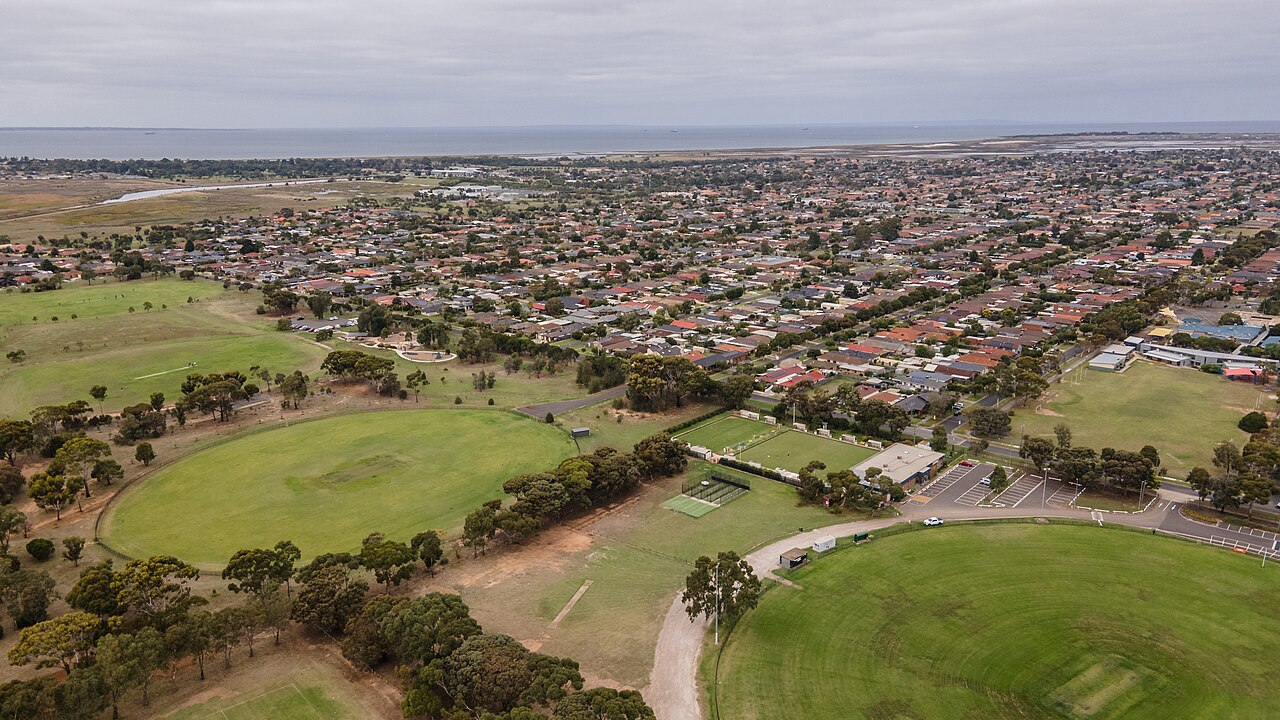
Verdict Box
Best for: families who want a newer house, a usable station, wider streets than inner Melbourne, and less weekend maintenance. Skip if: you want established village life, walk-to-everything errands, leafy old streets, or a deep cafe strip. Rent pressure: the family-house market is tighter than the apartment market; good 3-4 bedroom homes move quickly when they sit near schools, parks or the station. Commute reality: Williams Landing works because of the Werribee line, but station access and Palmers Road traffic can turn a simple commute into a logistics exercise. Food scene: functional, not rich. The Jolly Miller Cafe, Flames and Oporto cover quick meals around Overton Road and Gadwell Crescent, but you will still drive to Point Cook, Hoppers Crossing or Werribee for choice. Family fit: strong for practical families who value space, garages, train access and newer housing over character. Overall score: 7.1/10. Better than the lazy outer-suburb stereotype, weaker than the sales brochure version.
At-a-Glance Table
| Factor | Williams Landing 2026 |
|---|---|
| LGA | Wyndham City Council |
| Postcode | 3027 |
| Geographic tier | West |
| Region | outer-west |
| Transport grade | B+ |
| Overall grade | A |
Who It Suits
Priya, 41, spreadsheet parent — wants the train, a proper garage and predictable school-week logistics. The Upgrade Family — moving from an apartment or townhouse and ready to trade charm for bedrooms, storage and a second living area. Shift-Work Parents — need freeway access, late takeaway and a suburb that still functions when one adult gets home after dinner.
Rent & Property Reality
$350 per week is the cleanest published 2026 marker for a 1-bedroom unit in Williams Landing, while the broader unit rental market sits closer to $490 per week and has risen about 2% year on year according to current REA market data for Williams Landing. Use the 1-bedroom number carefully: Williams Landing does not have a deep stock of classic one-bed apartments, so the sample can swing depending on whether the market is showing compact units near Clark Street, room-style listings, or small apartments around the town-centre edge. For the broader rental picture, REA lists the median unit rent at $490 per week, based on 52 unit rental listings over the past 12 months, with unit demand up 42%; see the current realestate.com.au Williams Landing market profile. You can also cross-check live asking rents via Domain’s Williams Landing rental listings.
For families, the 1-bedroom figure is mainly useful as a pressure gauge, not the main decision point. If even the smaller stock is being advertised in the mid-$300s to high-$400s, then 3-4 bedroom family homes are not going to feel cheap once you add parking, school proximity and pet approval. The value proposition is still real compared with many inner and middle-ring suburbs: you are paying for newer construction, a garage, ducted systems in many homes, and a train station that can get one parent to the CBD without running two cars every day. But the bargain story is thinner in 2026 than it was a decade ago.
The practical trap is comparing Williams Landing only by weekly rent. A house $30 cheaper but west of your routine can cost that back in fuel, toll avoidance, missed train connections and after-school driving. Prioritise floor plan, garage access, heating and cooling, and how the school run works at 8:20am. A slightly dearer home near Williams Landing Boulevard, Overton Road services or a direct station route can be better value than a cheaper listing that looks fine on paper but makes every weekday harder.
Local Reality & Pockets
The best family pockets in Williams Landing are the ones that make the weekday loop boring in a good way: home, school or childcare, station, groceries, dinner, sport, repeat. Streets around Williams Landing Boulevard and the better-connected parts near Overton Road tend to make that easier because you can reach the town-centre services, The Jolly Miller Cafe and quick food options without turning every small errand into a suburb-crossing drive. Clark Street and the apartment/town-centre edge suit smaller households or parents who commute by train, but families should inspect parking, visitor spaces and lift access with a cold eye.
If you are choosing a house, favour streets with usable driveways, genuine off-street parking and a route that does not dump you into the worst of Palmers Road at the same time as everyone else. The suburb is newer, which means many homes look neat from the street, but the difference between a comfortable family house and a thinly built rental can show up in summer cooling, upstairs heat, garage storage and noise transfer between rooms. Do not be distracted by fresh paint if the floor plan gives you no quiet zone for homework, shift work or a baby’s sleep.
Areas close to Sayers Road and the heavier arterial edges need a noise check at peak times, not just at Saturday inspection hour. The station is a major advantage, but living near it is not automatically better if parking overflow, traffic movement or apartment density annoys you. Conversely, being deeper inside the estate can feel calmer, but bus dependence and school-run driving become more obvious.
Two gotchas matter. First, Williams Landing can feel under-served for the number of families using it: the train helps, but local buses, footpaths across awkward desire lines and station access are not always as smooth as the map suggests. Second, local dining is shallow. Overton Road and Gadwell Crescent handle emergency dinners, coffee and takeaway, but families expecting a long strip of independent restaurants will end up in Point Cook, Hoppers Crossing or Werribee more often than they planned.
Signature Craving
The family food test in Williams Landing is not whether you can find a destination dinner; it is whether you can feed tired children at 6:15pm without losing the whole evening. The Jolly Miller Cafe at 100 Overton Road is the reliable daytime anchor: coffee, brunch, lunch, and the kind of neutral meeting point that works for prams, grandparents and parents squeezing a catch-up between errands. Flames, also at 100 Overton Road, covers the kebab-and-chicken lane when the fridge plan collapses. Oporto at 4 Gadwell Crescent is the drive-by option when sport, tutoring or a late train has already eaten dinner time. The honest verdict: Williams Landing has enough for family logistics, not enough for food curiosity. If eating out is a core part of your week, you will keep a wider western-suburbs rotation.
Comparisons Table
| Suburb | Transport | Tier | Region |
|---|---|---|---|
| Williams Landing | B+ | West | outer-west |
| Cocoroc | N/A | West | outer-west |
| Hoppers Crossing | C+ | West | outer-west |
| Laverton | N/A | West | outer-west |
Trust Block
Author: Priya Sharma — Family-and-community correspondent; reads council planning notices for fun.
Data: data/melbourne_suburbs_master.json (Codex per-LGA enumeration, cross-checked vs VEC + Australia Post + ABS SA2 boundaries), data/suburb_scores.json (composite percentile grades), data/venues/.json (OpenStreetMap + Gemini-verified venue catalog).
Last reviewed: 2026-05-26. Not financial advice. We do not accept paid placements in editorial.
FAQ
Q: Is Williams Landing actually good for families in 2026? A: Yes, but for practical reasons rather than romance. Williams Landing suits families who want newer housing, garages, a train station, reasonable road access and a suburb built around everyday logistics. It is less convincing if your idea of family life includes old trees, a deep local high street, walkable weekend culture and many independent restaurants. The family value is in space, storage, commute options and relatively modern homes. Inspect the exact street, because traffic exposure, parking and station access vary more than the suburb’s marketing suggests.
Q: What are the best pockets of Williams Landing for parents? A: Start with the streets that simplify the weekday routine: parts near Williams Landing Boulevard, the Overton Road services, and routes that connect cleanly to the station without forcing you through the worst traffic pinch points. Families usually do better with homes that have proper driveways, useful garages and a second living space than with the most polished facade. The Clark Street town-centre edge can work for commuters and smaller households, but parents should check parking, lifts, storage and noise before choosing apartment convenience over a quieter house pocket.
Q: Which areas should families inspect more carefully? A: Be more cautious near major traffic edges such as Palmers Road, Sayers Road and any route that carries heavy peak movement. These locations can be convenient, but noise and turning delays are easy to underestimate during a calm weekend open. Also inspect dense townhouse or apartment pockets for visitor parking, bin areas, garage dimensions and how children would move safely between home, car and footpath. A neat-looking newer dwelling can still have poor acoustic separation, limited storage or upstairs bedrooms that become hot in summer.
Q: How is the commute from Williams Landing to the CBD? A: The commute is one of Williams Landing’s strongest family arguments because the suburb has a Werribee line station. A train trip to Southern Cross is often around the half-hour mark on direct services, but the real family calculation includes getting to the station, parking or walking safely, and handling disruptions. If one parent works in the CBD and the other manages school or childcare drop-off, test the full routine at peak time. The train is useful; the access logistics decide whether it feels easy.
Q: Do families need two cars in Williams Landing? A: Many families will function better with two cars, especially if work, school, childcare and sport are spread across different western suburbs. The station can reduce CBD commuting pressure, but it does not remove the need for local driving. Buses exist, yet they are not always timed or routed around the way family weeks actually run. A one-car household can work if one adult uses the train, the home is close to key services, and school or childcare is nearby. Otherwise, the suburb rewards car access.
Q: Is the food scene family-friendly? A: It is family-useful rather than exciting. The Jolly Miller Cafe on Overton Road gives the suburb a proper cafe anchor, while Flames and Oporto cover fast, low-friction meals when the family schedule breaks. That is enough for school-night survival and casual weekend coffee, but it is not a deep dining strip. Families who like trying new restaurants will head to Point Cook, Hoppers Crossing, Werribee or further in. The upside is convenience; the downside is that local choice runs out quickly.
Q: What should renters check before applying for a family home? A: Check heating and cooling performance, upstairs temperature, garage usability, storage, bedroom separation and whether the lease allows pets if that matters. In Williams Landing, many rentals look modern online, but family comfort depends on small details: can two cars park without blocking each other, is there space for bikes or scooters, does the living area handle homework and TV at the same time, and is the backyard genuinely usable? Also drive the school or station route during the actual time you will use it.
Q: Is Williams Landing better than Point Cook for families? A: It depends on the family. Williams Landing has the advantage of a train station and a more compact newer-suburb feel, which can suit CBD commuters. Point Cook generally offers more retail, food and service depth, but it can also mean more driving and heavier internal traffic depending on the pocket. If one parent commutes by train, Williams Landing deserves serious attention. If your family values shopping choice, more established services and a broader dining spread, Point Cook may feel easier day to day.
Q: What is the biggest mistake families make when choosing Williams Landing? A: The biggest mistake is buying or renting the floor plan and ignoring the routine. A house can look ideal in photos, but if it sits on the wrong side of your commute, has awkward parking, catches arterial noise or forces every child-related errand into the car, the shine wears off fast. Do weekday test drives, walk the station route, check nearby food and pharmacy options, and inspect at different times if possible. Williams Landing works best when the address supports your actual week, not an imagined one.